International Collaborative Typhoon Experiment enhances scientific cooperation in the Asia-Pacific region
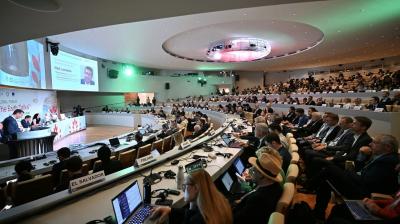
In June 2026, the International Coordination Meeting for the 2026 Asia-Pacific Typhoon Observation Experiment was successfully convened online, marking a significant step toward enhanced regional collaboration in tropical cyclone monitoring and forecasting.
The meeting was organized under the auspices of the World Meteorological Organization (WMO) Typhoon Committee and the Experiment on Typhoon Impacts in the Coastal Area (EXOTICCA) project, endorsed by the World Weather Research Programme (WWRP). It focused on coordinating joint aircraft observations for the upcoming 2026 typhoon season. Experts from the Shanghai Asia-Pacific Typhoon Collaborative Research Center (AP-TCRC), Shanghai Typhoon Institute (STI) of China, Hong Kong Observatory (HKO) of Hongkong, China, Yokohama National University (YNU) of Japan, and National Institute of Meteorological Sciences (NIMS) of Korea Meteorological Administration (KMA) participated in the discussions.
- Author(s):
- Dr. Robert Rogers and Dr. Jie Tang
Advancing Joint Observation Capabilities
Participants outlined their respective observation plans for the 2026 season, emphasizing complementary capabilities across different airspaces and platforms. Experts from AP-TCRC described plans for use of a Beechcraft King Air 350 for airborne sampling of typhoons in the nearshore environment of East China and coordinated ground-based measurements of landfalling typhoons in China. Experts from HKO announced a strategic shift to initiate reconnaissance missions earlier, targeting tropical depressions before they develop into strong tropical cyclones. This approach aims to evaluate how early-stage aviation data can improve forecast accuracy and operational services.
Experts from NIMS illustrated how Beechcraft King Air 350 aircraft will be deployed for severe weather and typhoon observations. The aircraft observation will integrate ocean glider data to achieve coordinated air-sea interface sampling. Yokohama National University announced Japan’s G-IV research aircraft will operate from 21 August to 15 October, focusing on typhoons during their intensification and mature stages, particularly those approaching coastal regions of Okinawa and the main islands of Japan.
Building a Sustainable Coordination Framework
A key outcome of the meeting was the consensus among Chinese, Japanese, and Korean experts to actively pursue international collaborative observations in the Northwest Pacific, with special emphasis on the East China Sea.
AP-TCRC proposed establishing a standing international consultation mechanism. Participants agreed to further clarify operational parameters for the 2026 season, including available flight windows, mission hourly quotas, flight information region limitations, operational airspace, target typhoon selection criteria, and real-time communication protocols.
This meeting marks the transition of Asia-Pacific typhoon observation cooperation from ad-hoc task sharing to an institutionalized mechanism. It is built upon the collaboration of three independent initiatives – the EXOTICCA project led by AP-TCRC and HKO, the Moonshot project led by YNU, and Korea’s Severe Weather experiments led by NIMS – which share common objectives to advance typhoon forecasting while focusing on urgent scientific questions unique to respective regions. Future coordination will follow a structured workflow encompassing email-triggered alerts, target-driven planning, forecast consultations, flight plan sharing, and data exchange.
Implementation of Cooperative Framework in 2026
This cooperative framework was implemented In 2026 for typhoons "Bavi," "Dolphin," "Saudel," and "Dujuan," with cooperative experimental observations, data sharing, and discussions on scientific issues. Observations were conducted using various platforms, including aircraft, wave gliders, and buoys, yielding more than 10 types of high-quality observational data, such as aircraft soundings, buoy measurements, wave glider data, and geostationary satellite data. Effective international cooperation filled the gap in high-precision offshore observational data for typhoons in the western North Pacific. See figures below for examples of the mission planning for aircraft from each of the institutions.The establishment of this pragmatic and sustainable international coordination is expected to significantly enhance typhoon forecasting and early warning capabilities, contributing to regional disaster risk reduction efforts aligned with WMO’s mission.
- Region:
- Region II: Asia