
Financing early warnings
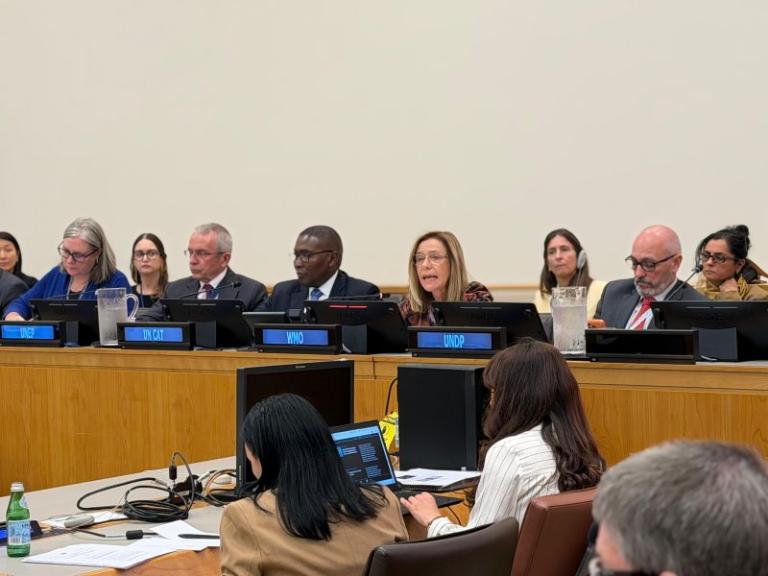
Excellencies, colleagues
Allow me to begin by stating the obvious: we all know early warnings work.
We all know that when countries have comprehensive early warning systems, they reduce the number of disaster related deaths, six times. And we all know that early warnings are adaptation in action. When climate intelligence is accurate, decisions are accurate, saving people and economies.
The recent disaster in Nepal and China is a stark reminder that climate adaptation must include the ability to anticipate and manage increasingly complex, compound and cascading risks. We are seeing new and evolving risks, leaving communities to respond in a blink of an eye.
Adaptation finance must support the entire warning chain: observations, research, data exchange, forecasting, communication and the capacity to act. We must invest in sustainable national and regional capabilities that can address emerging risks, operate across borders and ensure warnings reach those most at risk. We cannot prevent every hazardous event, but with effective early warning and early action, we can save lives and livelihoods.
And we know that we can make this happen. WMO co-leads along with partners, the Early Warnings for All Initiative, through which we have seen a 143 per cent increase in countries reporting multi-hazard early warnings systems since 2015.
Since 2015, nearly 400 million people living in LDCs and SIDS have access to forecasts and early warning services through the Climate Risk and Early Warnings System or CREWS. The digital transformation of national meteorological and hydrological services in Africa has increased warnings issued by 2500%. The Systematic Observations Financing Facility (SOFF) is supporting countries in building and sustaining the observing infrastructure on which effective forecasting depends.
This is all welcome progress, but what we need now is financing at the scale of the risk—and financing that is sustained, predictable and reaches the countries where the gaps are greatest. The global observation system must be viewed as essential public infrastructure and funded as such. We must move beyond project financing to financing outcomes. And we must partner to scale up successful models I outlined above. Pooling finance into the WMO commons – a funding mechanism that brings public and private partners – can deliver stability around the global infrastructure that benefits all countries. The question is whether we are prepared to invest now or whether we will continue to pay the price afterwards.
Related resources
Statement by