COP31: Turkic States Regional Climate Centre: opportunities and requirements.
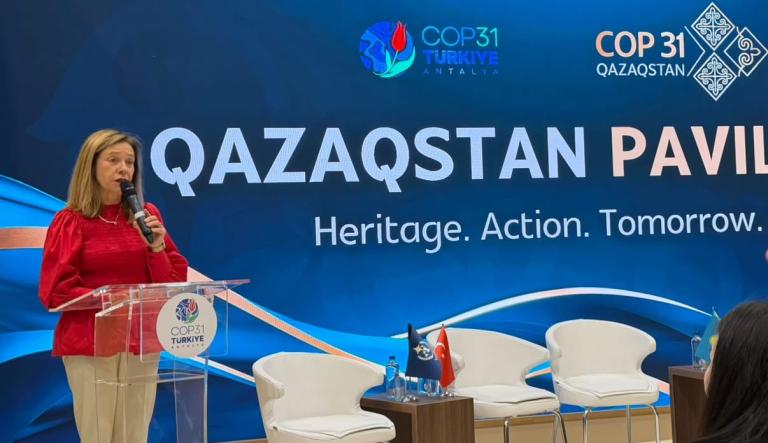
Excellencies, Professor Toros, dear colleagues,
Thank you to the Governments of Türkiye and Kazakhstan, and to both meteorological services, for bringing us together.
This morning’s discussion is a great example of countries choosing to work together for the common good.
At WMO, we see the value of that cooperation every day. We bring together what national services measure, to build a picture of our changing climate.
That picture is clear.
Around the world, glaciers are shrinking in every major mountain region, for the fourth year in a row. In just three years, they have lost about 1,400 billion tonnes of ice. That is more than twice all the water in Lake Van.
In 2025, rivers ran below normal across Central Asia. Ice and snow feed the rivers that farms, cities and industry rely on.
At the same time, droughts, floods, heatwaves, and sand and dust storms are becoming more intense. Food, water, energy and health are all being hit.
These risks are shared. So the information to manage them should be shared too. Because what each country measures improves forecasts for its neighbours, and for the world.
That is what WMO Regional Climate Centres are for. They connect global climate science and prediction with the needs of each country. They provide regional climate monitoring, and turn global forecasts into seasonal outlooks for the region. National services then turn these into advice and early action for their own people.
This region does not start from zero. Countries already work together through our Regional Associations for Asia and for Europe, and through the Interstate Council on Hydrometeorology of the Commonwealth of Independent States.
Where WMO regional centres already work, they have improved forecast quality, made climate services more consistent, and increased the benefits countries draw from climate information.
A regional centre for Central Asia and the Turkic States could add value in three ways.
One is regional products that no single country can easily produce alone: climate monitoring, seasonal outlooks, drought assessments and climate watches.
Another is a technical hub, offering guidance, tools and training for national staff. National services would remain the primary providers of climate services in their own countries.
A third is stronger cooperation on shared priorities: drought, water planning, glacier monitoring and farming.
Regional cooperation of this kind also helps countries work towards achieving Early Warnings for All, with better outlooks, more impact-based forecasting and earlier action.
But a regional centre also has requirements.
WMO’s pathway for these centres is well established. The first step is an assessment of what countries need. Then come clear institutional and governance arrangements, quality management, agreed data sharing, and staff and funding that last beyond a single project.
National ownership is just as important. Cooperation must be voluntary, and must respect each country’s mandate, data policy and authority.
These requirements deserve careful analysis. I encourage you to continue this dialogue, with the support of our Regional Associations for Asia and Europe. WMO’s guidance and expertise are available to help.
In the end, a regional centre is judged by one thing: whether it helps people prepare for the next drought, flood or heatwave. That is the common good that today’s discussions will serve.
Thank you.
Statement by