

Early warning protection expands worldwide
ANTALYA, WMO/UNDRR – More countries than ever are reporting multi-hazard early warning systems, but major gaps remain in the countries and communities most vulnerable to disasters, according to a new report from the United Nations Office for Disaster Risk Reduction (UNDRR) and the World Meteorological Organization (WMO).
- Published in partnership with:
- United Nations office for Disaster Risk Reduction (UNDRR)
- 70 per cent of countries report having multi-hazard early warning systems
- Major gaps persist in the countries most at risk
- Powerful El Niño raises the stakes
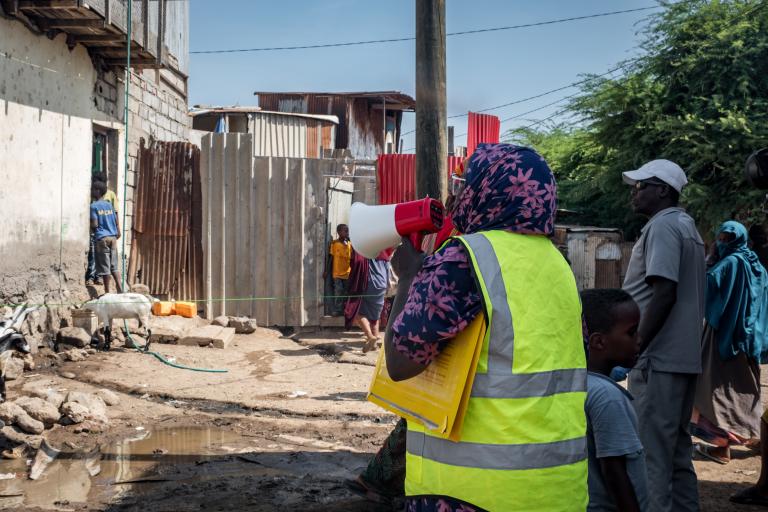
The findings come as an intensifying El Niño threatens to bring more extreme weather to many parts of the world, underscoring the urgency of ensuring that forecasts result in anticipatory action.
According to the Global Status of Multi-Hazard Early Warning Systems 2026, the number of countries reporting some multi-hazard early warning system capability has risen to 136, an increase of 17 from March 2025. This brings global coverage to 70 per cent of countries, a 143 per cent increase since reporting began in 2015.
Updated analysis shows a strong association between more comprehensive systems and lower disaster impacts. Countries with substantial to comprehensive early warning capabilities recorded disaster-related mortality that is 6.1 times lower than countries with limited to moderate systems. They also recorded 3.2 times fewer people affected by disasters.
However, significant gaps remain, especially among countries with the least capacity to adapt to growing climate risks. Small island developing States (SIDS) have the lowest reported coverage, while Least Developed Countries (LDCs) have the lowest overall comprehensiveness scores, despite registering the greatest improvement from their initial scores.
“Countries have made significant progress in strengthening their early warning systems, but too many people remain unprotected. If we are serious about reducing loss and damage, strengthening early warning and early action in the most vulnerable countries must be a top global priority,” said Kamal Kishore, Special Representative of the UN Secretary-General for Disaster Risk Reduction and Head of UNDRR.
El Niño provides a window for early action
WMO's latest seasonal climate outlook indicates that the current El Niño could be unprecedented in strength. WMO warns that its effects are already being felt, with extreme weather expected to multiply and cascade as the event intensifies.
“The current El Niño event could be literally off our monitoring charts. While we cannot stop El Niño, we can prevent many of its worst human consequences. Early warning systems give us the opportunity to anticipate risks and act before extreme weather leads to a humanitarian disaster,” said Celeste Saulo, Secretary-General of WMO.
The report was issued to coincide with a high-level event with UN Secretary-General António Guterres on Early Warnings for All: Delivering our Promise to Protect Everyone in Antalya, Türkiye.
From warning to action
The true measure of an early warning system's effectiveness is its ability to trigger timely action. This requires planning and preparation across government agencies, community engagement, and financing. Strengthening these capabilities is critical as the impacts of the El Niño unfold.
In 2025, the number of active anticipatory action frameworks increased 70 per cent in a year, from 154 to 262, spanning 75 countries. A total of 146 anticipatory action activations were recorded in 54 countries, directly reaching 9.6 million people. These interventions were backed by US$119.9 million in pre-arranged financing.
Progress is being made to close remaining gaps
Every region now has reported early warning coverage of at least 50 per cent. Africa recorded the largest increase in reporting over the past year, with 11 additional countries reporting some capabilities, bringing its regional coverage to 77 per cent.
Europe and Central Asia continue to have the highest level of comprehensiveness, while the Arab States have the lowest. The average comprehensiveness score in Africa is now on a par with the Americas and the Caribbean.
In 2025, the proportion of WMO Members sharing data from at least one Global Basic Observing Network-compliant station increased from 37 per cent in 2023 to 52 per cent, reflecting improvements in the observation networks that underpin accurate forecasts and warnings.
Mobile-based public warning systems have also continued to expand. As of June 2026, 38 countries had fully operational Cell Broadcast systems, while a further 17 countries were in the final stages of developing them.
About the Report
The Global Status of Multi-Hazard Early Warning Systems reports have been jointly produced by UNDRR and WMO since 2022. They track global progress against Target G of the Sendai Framework for Disaster Risk Reduction 2015–2030 and serve as the primary monitoring report for the Early Warnings for All initiative.
Media inquiries
For media inquiries, please contact:
- UNDRR: Omar Amach, Public Information Officer, UNDRRComms
 un [dot] org (UNDRRComms[at]un[dot]org)
- WMO: Clare Nullis, Press and Media Officer, CNulliswmo [dot] int (CNullis[at]wmo[dot]int)
The World Meteorological Organization is the United Nations System’s authoritative voice on Weather, Climate and Water.
For further information, please contact:
- Clare Nullis WMO media officer cnullis@wmo.int +41 79 709 13 97