About Us

Overview
WMO is the United Nations system's authoritative voice on the state and behaviour of the Earth's atmosphere, its interaction with the land and oceans, the weather and climate it produces and the resulting distribution of water resources.
As weather, climate and the water cycle know no national boundaries, international cooperation at a global scale is essential for the development of meteorology and operational hydrology as well as to reap the benefits from their application. WMO provides the framework for such international cooperation for its 194 Member States and Territories.
WMO’s mandate relates to the areas of meteorology (weather and climate), operational hydrology and related geophysical sciences. WMO has a powerful role in contributing to the safety and welfare of humanity by fostering collaboration between its Members' National Meteorological and Hydrological Services (NMHSs) and advancing the application of meteorology and hydrology in many societal and economic areas.
WMO regulates and facilitates free and unrestricted exchange of data and information, products, and services in real- or near-real time. This is critical for applications relating to the safety and security of society, social and economic welfare, and the protection of the environment. WMO standards and policies contribute to policy formulation in these areas at national and regional levels.
WMO Members
WMO has 194 Members, including 188 Member States and 6 Territories, maintaining their own meteorological services. Its main goal is to facilitate international cooperation in the development of meteorology and the exchange of information and technology related to weather, climate, hydrology and related environmental fields.
WMO Members work together to improve the accuracy and reliability of weather forecasts, warnings, and services to protect life and property. They also collaborate on research and development of technologies, standards, and methods for measuring and monitoring weather and climate-related variables. Additionally, they work towards improving the global observation, exchange, and management of weather and climate data.
Explore more about WMO


Structure
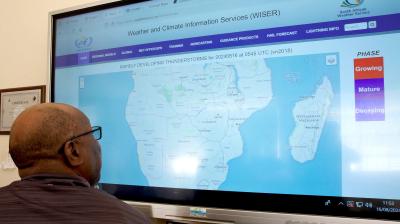
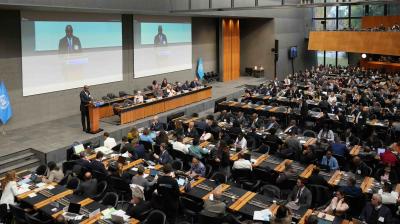
The WMO comprises World Meteorological Congress, the Executive Council, six Regional Associations and two Technical Commissions. Its Secretariat, which includes four regional offices, facilitates worldwide cooperation.
Awards
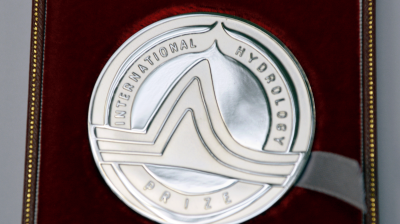
WMO Awards recognize outstanding contributions in the field of meteorology, breakthroughs in scientific research, young scientists for their exceptional contributions to meteorology and climatology, and young engineers/scientists working on development hydrometeorology.