Building South America's First Regional Severe Weather Forecasting Programme
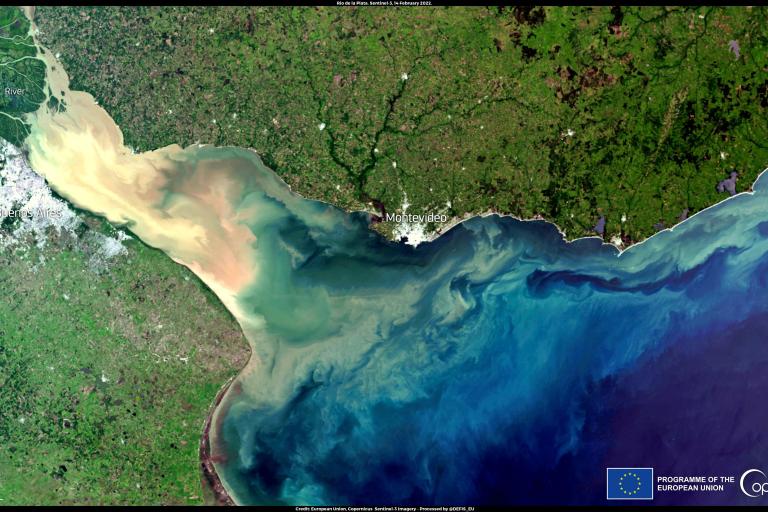
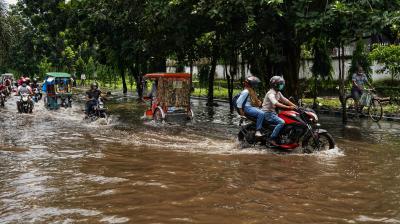
The La Plata Basin spans five countries and is one of South America's most weather-exposed regions. Heavy rainfall, floods, severe thunderstorms, hail, strong winds, tornadoes and extreme temperatures regularly disrupt communities, agriculture, transport, energy and water management across Argentina, Bolivia, Brazil, Paraguay and Uruguay.
A storm that develops in one country can affect another within hours, making regional cooperation essential. Timely, consistent forecasts can help National Meteorological and Hydrological Services (NMHSs) support decision-makers, emergency managers and communities before severe weather causes major impacts.
To respond to this need, the World Meteorological Organization (WMO) is supporting the development of the first Severe Weather Forecasting Programme in South America, focused on the La Plata Basin. The initiative will strengthen forecasting capabilities and early warning services in the five participating countries, contributing to the Early Warnings for All initiative.
A regional approach to share severe weather risks
The Severe Weather Forecasting Programme (SWFP) is built around a simple but powerful idea: better warnings are possible when global, regional and national expertise are brought together.
Through SWFP’s “cascading forecast process”, global centres provide high-quality numerical weather prediction products and guidance. Regional centres then tailor this information to the needs of a specific subregion. National services use this guidance to prepare forecasts, watches, warnings and alerts for their own countries and communities.
For the La Plata Basin, support will come from global and regional partners, including the World Meteorological Centres in Montreal and Washington and the European Centre for Medium-Range Weather Forecasts (ECMWF). Brazil’s National Institute for Space Research (INPE) is also expected to contribute high-resolution modelling and nowcasting products, helping forecasters monitor rapidly evolving weather systems and storms.
Through SWFP-La Plata Basin, operational forecasters will have better access to guidance on hazards such as heavy rainfall, severe thunderstorms, hail, tornadoes, strong winds and heat or cold extremes. In practice, this means timelier, better-informed warnings for people and sectors at risk.
Turning technical guidance into practical warnings
The new subprogramme is not only about technology, but also about ensuring that scientific information can be used effectively in day-to-day forecasting operations.
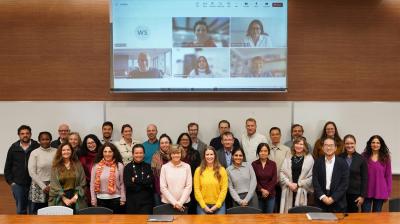
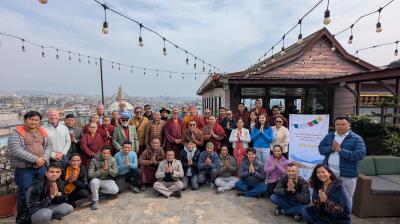
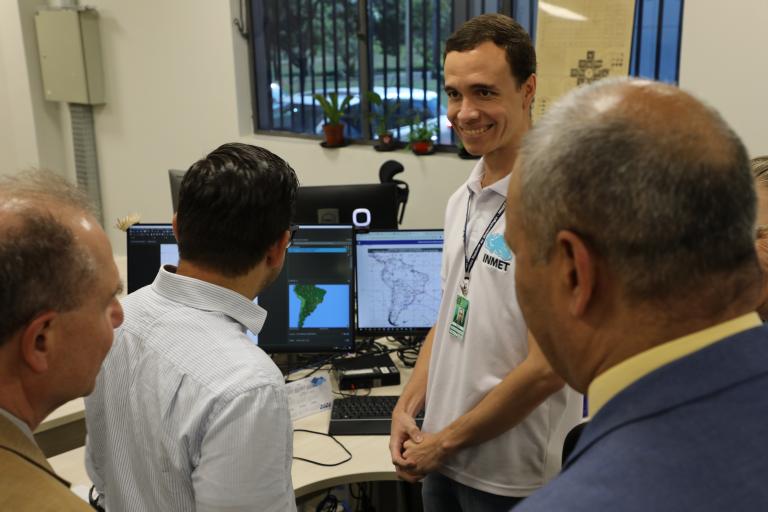
During a technical planning meeting hosted by Brazil’s National Meteorological Service (INMET) in Brasília from 18 to 22 May 2026, experts from the participating countries and contributing centres discussed how the subprogramme will operate, how countries will coordinate and how regional forecast guidance can best support national warning services.
Under the proposed arrangements, INMET would host the Regional Forecast Support Centre for the subprogramme, while Argentina’s National Meteorological Service (SMN) would provide back-up support as part of business continuity arrangements. This is particularly important in a region exposed not only to severe weather but also to disruptions caused by power outages, natural hazards and cyber incidents.
The pre-operational phase of the SWFP-La Plata Basin subprogramme is expected to begin in 2027, following the launch of a dedicated web portal and a training workshop for national focal points and operational forecasters.
Building on 20 years of experience
The launch of the La Plata Basin subprogramme comes as SWFP marks 20 years since it began as a demonstration project in southeastern Africa in 2006. Since then, it has expanded to more than 100 countries across 11 subregions, improving access to forecasting tools, guidance and early warning services.
For South America, the new subprogramme represents more than a technical expansion. It is an opportunity to strengthen cooperation and forecasting capacity across countries facing common weather risks.
By bringing together global science, regional coordination and national expertise, the SWFP-La Plata Basin subprogramme will help ensure that better forecasts lead to better decisions and, ultimately, to safer communities.
- Region:
- Region III: South America