

WMO at the 31st Conference of Parties (COP31) to the UNFCCC
From 9 to 20 November, Türkiye, Antalya, will host the 31st Conference of Parties (COP31) to the United Nations Framework Convention on Climate Change (UNFCCC). WMO's engagement at COP31 is closely aligned with the incoming COP31 Presidency's action agenda .
At COP31, WMO will continue to support Parties by providing authoritative scientific observations and information on the state of the global climate system, including through the launch of its flagship State of Climate update 2026, a science-based annual assessment of climate indicators and impacts on Earth Information Day on 09 November 2026.
COP31 is also an important opportunity to demonstrate how strengthened meteorological, hydrological and climate science capacities can accelerate action in a changing climate. In a year in which record-breaking extremes have had a cascading effect on all levels of society and the economy, and against the backdrop of an unprecedented El Niño, WMO will reiterate the importance of early warning systems as a proven and cost-effective means to strengthen resilience. From events on investments in Earth observations to presenting the science on greenhouse gas concentrations, heat and health, early warnings, and El Niño response, WMO will put science at the heart of COP31, making the case for sustained investment in the systems that protect us all.
- Contact information: wmo-cop
 wmo [dot] int (wmo-cop[at]wmo[dot]int)
- View the list of COP31 events organized by WMO
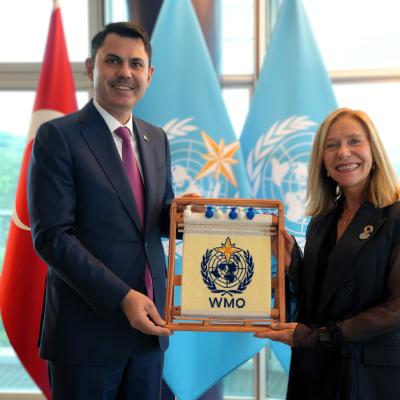
- View the photo of the event on Flickr
- Jump to News and Publications
Live Updates
El Niño forecasts guide early action
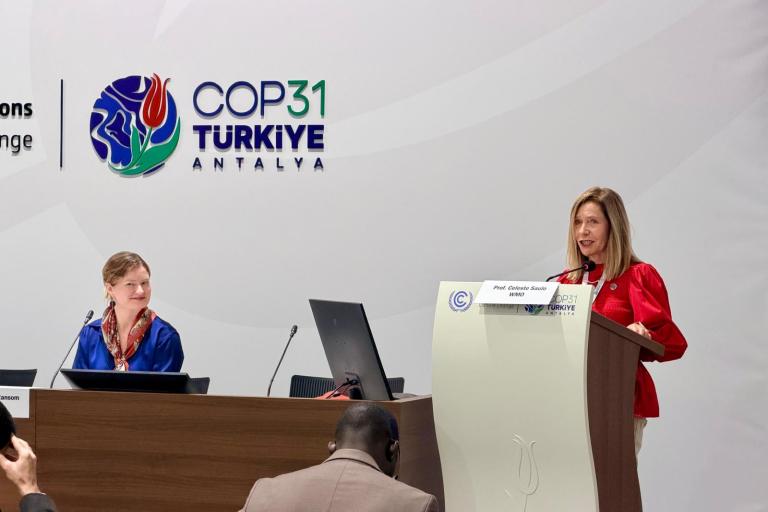
El Niño can raise the risk of drought in one region and heavy rain in another. WMO and partners trace how forecasters use observations from the tropical Pacific to produce regional outlooks that help countries issue early warnings and protect communities at risk.
"El Niño doesn’t flick a switch. It’s more like a dial that shifts weather patterns around the world. Drier here. Wetter there. Hotter almost everywhere," says WMO Secretary-General Celeste Saulo.
"No two El Niño events are the same. And even a perfect forecast is only the first test. What matters next is whether the right warning reaches the right person, at the right time," added the Secretary-General.
New financing platform targets weather data gaps
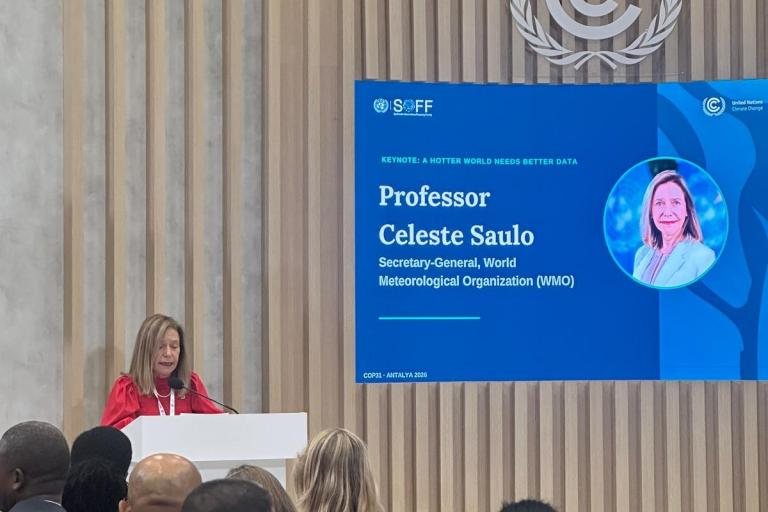
The Systematic Observations Financing Facility (SOFF) introduces a financing platform for Systematic Observation Impact Bonds, aiming to combine public, philanthropic and private capital. Countries report on improvements to weather observing networks and the support needed to expand coverage and keep stations reporting.
"The path ahead is clear. Invest where stations are fewest. Get existing ones reporting more often. And keep paying to run them so they don’t fall silent,” says WMO Secretary-General Celeste Saulo.
Climate monitoring needs long-term funding
Ministers and international partners discuss how to protect climate observations, strengthen coordination and secure long-term support amid funding uncertainties that threaten decades of climate records. A Declaration on Partnerships and Support for Closing Observation Gaps has also been presented to the COP31 Presidency.
“Records built over decades currently rest on short-term grants. On a single satellite. On a few specialists. On one copy of the data. We are funding long-term records with short-term money,” says WMO Secretary-General Celeste Saulo.
“Every gap weakens the Global Stocktake, how we track adaptation, and our warnings, including for this El Niño,” she adds.
Read the Secretary-General full statement.
Parties and organizations are invited to endorse the declaration by completing this short form.
Regional climate centre plan targets gaps in adaptation
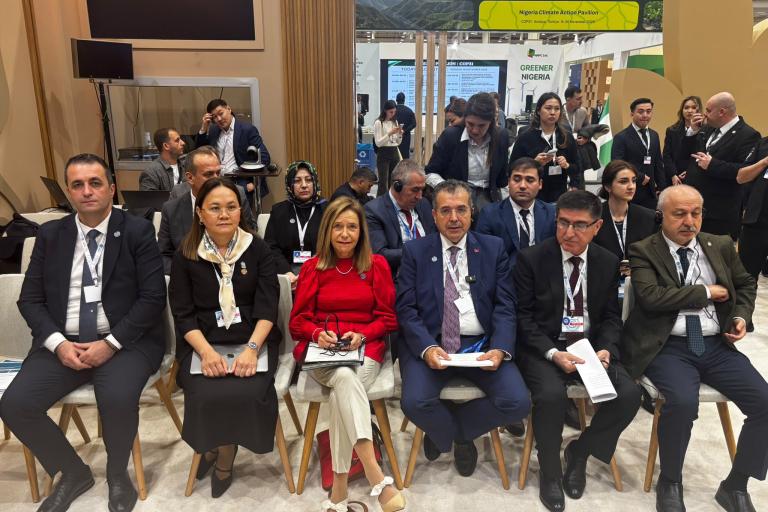
A proposed Turkic States Regional Climate Centre could help countries turn climate data into stronger adaptation plans. Weather service representatives, WMO and climate experts examine what it would take to establish and run the centre, with a focus on regional information sharing, technical requirements and governance.
“WMO’s pathway for these centres is well established. The first step is an assessment of what countries need,” says WMO Secretary-General Celeste Saulo in her opening remarks. “Then come clear institutional and governance arrangements, quality management, agreed data sharing, and staff and funding that last beyond a single project.”
Satellites put climate action to the test
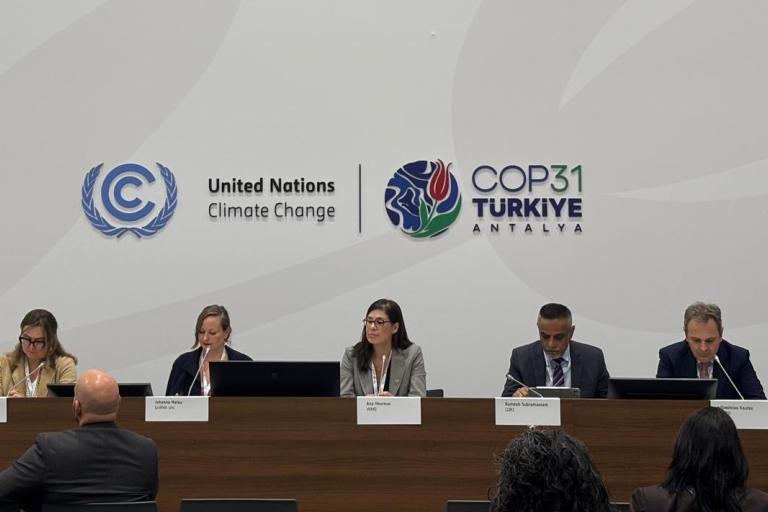
Experts assess how satellite data track emissions and adaptation progress at an event organized by the European Space Agency (ESA), Japan Aerospace Exploration Agency (JAXA), University of Exeter and Friedrich Schiller University Jena. The session examines the Global Carbon Budget and Global Goal on Adaptation indicators. WMO highlights its work on multi-hazard early warning systems, systematic observations and climate information services.
Weather data gaps put forecasts at risk
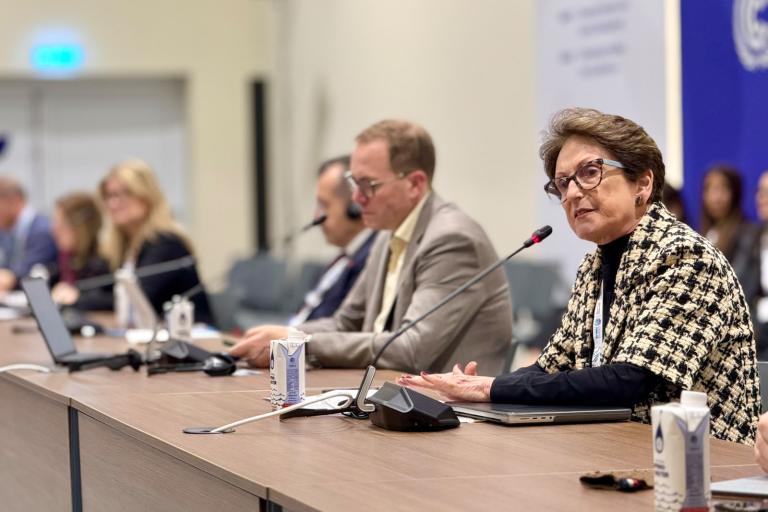
Government, science and finance representatives discuss long-term funding to close gaps in weather and climate observations. The European Centre for Medium-Range Weather Forecasts (ECMWF) and the Systematic Observations Financing Facility (SOFF) launch their Impact Studies Report on how better coverage in vulnerable countries could improve forecasts worldwide.
“Value only lasts if it is sustained. A weather station is not a one-off purchase. Installing one is not the same as sustaining it,” says WMO Secretary-General Celeste Saulo in her closing remarks. “It needs trained people, maintenance, and data shared every single day. Financing has to cover that, year after year.”
WMO at COP31: urgent call to action
Secretary-General Celeste Saulo sets out WMO’s priorities for COP31: sustained, timely data, better forecasts and early warnings and urgent action.
Financing forecasts and early warnings
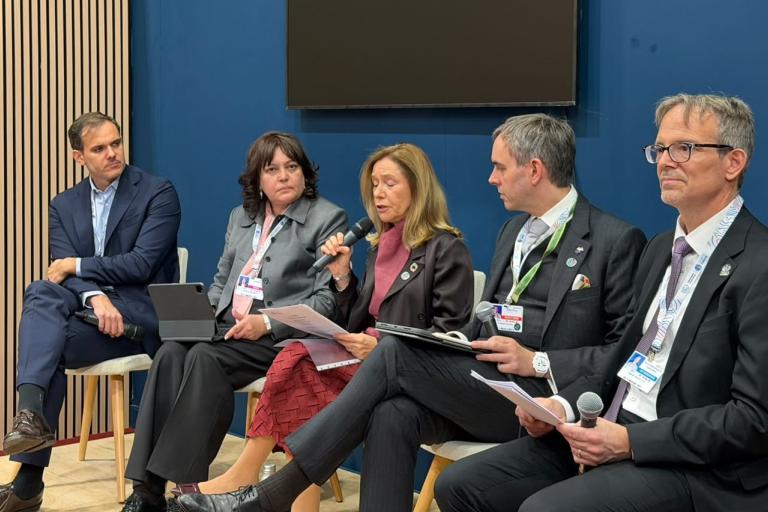
WMO and CREWS examine how the WMO Commons could help finance global observations, data exchange and forecasting. Countries share how they estimate the cost of early warning systems and climate services in their national adaptation plans.
“No country can forecast the weather alone. Something has to hold the whole cycle together. That is what our new fund – the WMO Commons – is for,” says WMO Secretary-General Celeste Saulo. “It pays for the standards that let every country’s data speak the same language. For the systems that turn national observations into forecasts everyone can use.
Earth Information Day at COP31
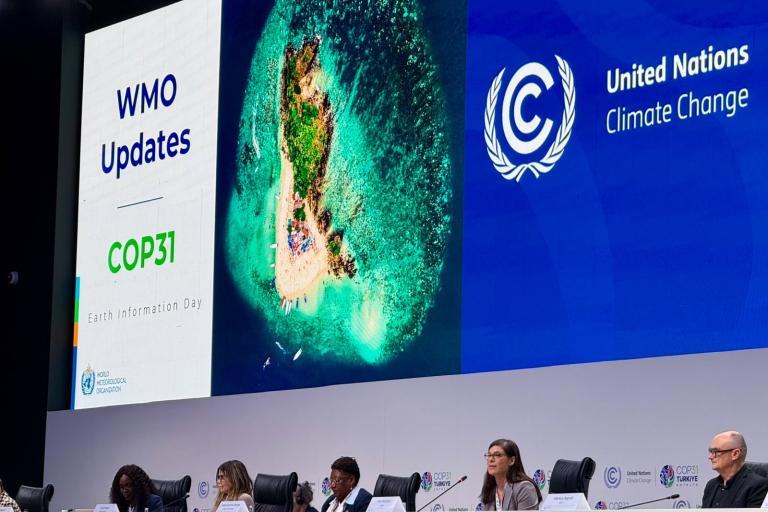
WMO presents the latest findings on global temperatures, greenhouse gases, ocean warming and the developing El Niño, while highlighting gaps in global observing systems and the importance of reliable climate data for forecasting, early warnings and adaptation.
How climate data helps farmers
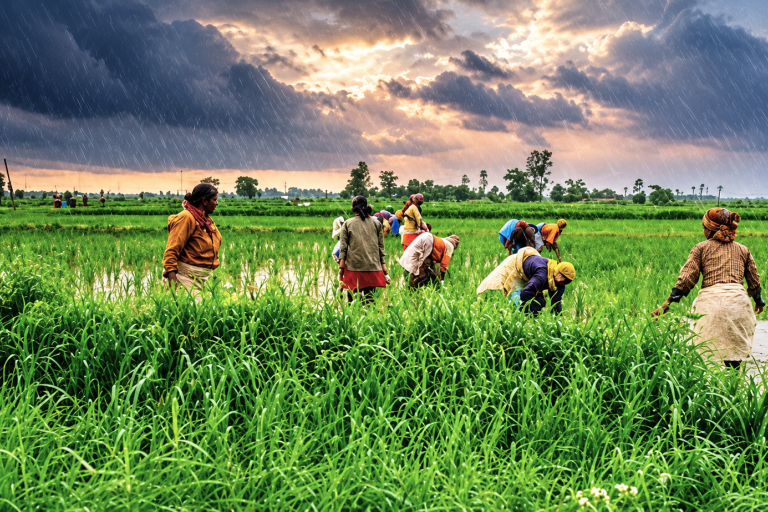
Smallholder farmers are at the centre of a WMO-led discussion on turning climate information into practical support for agriculture. The session examines how better use of climate and water information can help farmers adapt, protect livelihoods and improve food security.
"We can see a storm or a heatwave days ahead. The odds of a dry season, months ahead,” says WMO Secretary-General Celeste Saulo. “When farmers and pastoralists use these forecasts to decide what to plant, when to water, and when to move the herd, they protect their crops and livelihoods.
Guterres: “Climate records keep falling. The human costs keep rising”
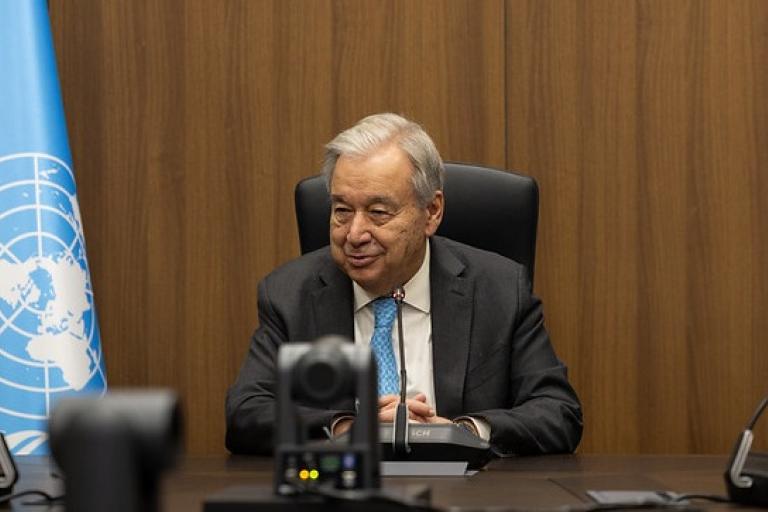
“A supersized El Niño is colliding with a planet already superheated by manmade climate change,” says UN Secretary-General António Guterres. He urges leaders to cut emissions faster, accelerate a just transition from fossil fuels and deliver the finance and protection vulnerable countries need.
State of the Climate Update - Key messages
News and Publications
Publications



WMO COP31 documents for Climate Science Advisors
WMO’s 2026 submissions to UNFCCC prioritize sustained systematic observations, stronger scientific evidence and early warnings and climate information to inform progress towards the Global Goal on Adaptation, and national climate plans and investment decisions.