Connecting Monsoon Science and Services
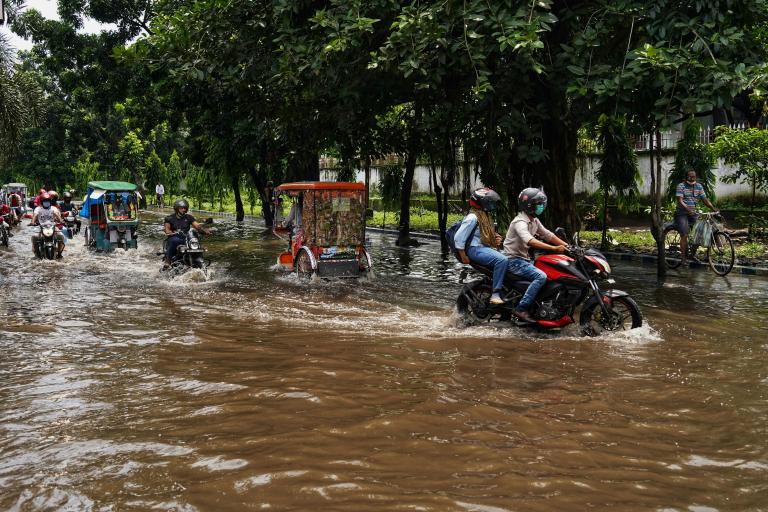
In July 2022, Pakistan experienced one of the most devastating monsoon seasons in its history. A single weather station in Sindh province recorded more than 1 600 millimetres of rain in a single day. By the end of the season, the country had received 175% of its normal annual rainfall, severely disrupting the lives of around 12 million people.
Monsoons shape the lives of more than two-thirds of the world's population across Asia, Africa, Australia and the Americas, from densely populated cities to Small Island Developing States (SIDS). Monsoon extremes rarely arrive alone. Floods, droughts, heatwaves and landslides can strike in sequence or simultaneously, creating cascading impacts that are among the greatest challenges for operational meteorology today.
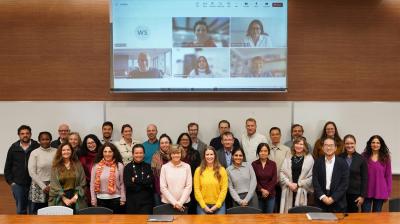
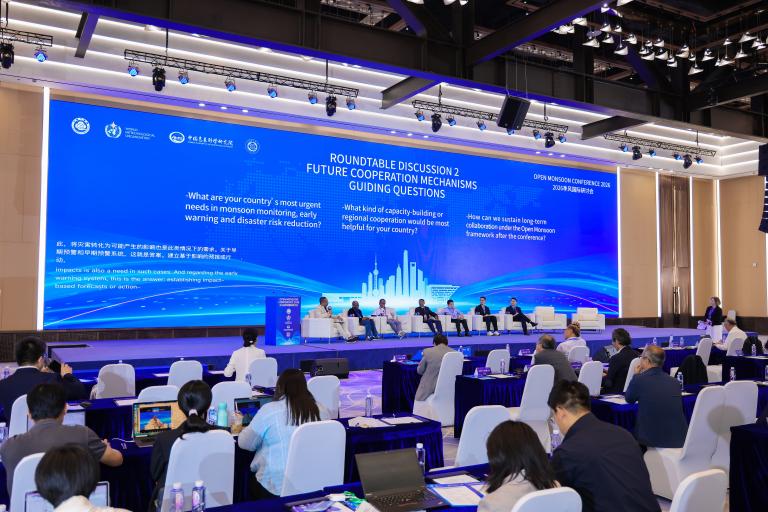
Against this backdrop, scientists, forecasters and policymakers gathered in Shanghai in May for the Open Monsoon Conference 2026 (OMC2026), co-organized by the World Meteorological Organization (WMO) and the China Meteorological Administration (CMA) and locally hosted by the Chinese Academy of Meteorological Sciences (CAMS) and the Shanghai Meteorological Service. The conference examined how advances in monsoon science, observations and forecasting can better support the services that help communities prepare for increasingly complex weather and climate risks.
A science still evolving
Monsoon science has advanced considerably over recent decades. Researchers now have a much better understanding of the large-scale climate drivers that influence monsoon variability. such as the El Niño-Southern Oscillation (ENSO), the Indian Ocean Dipole and the Madden-Julian Oscillation. Forecasting systems have also improved, with seasonal outlooks increasingly supporting agriculture, water management and disaster preparedness.
These advances are already making a difference. Since 2007, Myanmar has held a national monsoon forum twice a year, bringing together forecasters, agricultural agencies and disaster management authorities to translate seasonal outlooks into practical guidance. In India, seasonal forecasts with lead times of three to six months are now informing agricultural planning and water resource management, where even a 10% deviation in rainfall can put significant stress on food and water systems. In Afghanistan, the national meteorological service issues flash flood and landslide warnings at least six hours in advance, giving communities in mountainous areas time to reach safety.
Even so, discussions at OMC2026 highlighted that important challenges remain. Maintaining scientific rigour and extending forecast lead times remain a priority. Artificial intelligence (AI) is opening new possibilities, but current AI-based models tend to underpredict the intensity of extreme events. The emerging consensus is that AI should complement physical understanding, not replace it.
The gaps that remain
On the scientific side, models systematically overestimate the strength of the ENSO-monsoon relationship. Monsoon onset and withdrawal also remain difficult to predict with useful lead times, while extending reliable forecast skill to subseasonal-to-seasonal timescales is a particular priority. The potential impact of climate tipping elements on monsoon regions was also identified as an area requiring further research.
When it comes to observations, regional coordinated aircraft missions are improving typhoon observations, while satellite data is increasingly filling gaps where surface networks cannot reach. But uncertainties in ocean surface fluxes remain large, and in many regions surface networks are too sparse to capture the processes that drive extreme events. What is needed is not only additional observations, but better targeted observations shared more openly across borders.
Operational services face additional constraints. Global models developed primarily for mid-latitude conditions do not always perform well in the tropics. Some representatives noted that as many as half of their automatic weather stations are not functioning at any given time. For SIDS, the stakes are especially high. As Abdulla Wahid, Permanent Representative of the Maldives with WMO put it, "We are a little far away from the main continent, and it seems that we are left on our own to manage our situation. And it is not so easy".
From research to resilience
None of these gaps can be closed by any one country working alone. Strengthening the full value chain, from coordinated observations and improved forecasting to warnings that reach the communities most at risk, requires sustained international collaboration. That collaboration must also be more inclusive.
Representatives from Africa and Indian Ocean island states noted that southern hemisphere monsoon systems received far less attention at the conference than the boreal summer monsoon systems of Asia. A truly global monsoon science cannot afford these blind spots. The United Nations' Early Warnings for All initiative provides a framework for a more connected and equitable effort. But frameworks only work if the institutional connections they require are built and maintained.
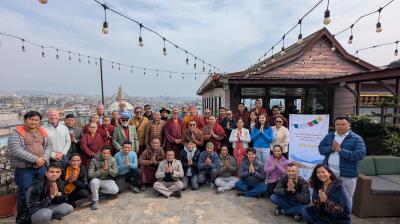
OMC2026 brought together 149 participants in Shanghai and up to 150 online attendees from 41 countries, with around two-thirds of them early career professionals. The conference will produce scientific outcomes and recommendations, intended to support continued discussion and collaboration. The questions raised in Shanghai will not be answered quickly. But addressing them will be essential to strengthening resilience in monsoon-affected regions.
- Region:
- Region II: Asia