How WMO’s support helped strengthen multi-hazard early warning systems across diverse contexts
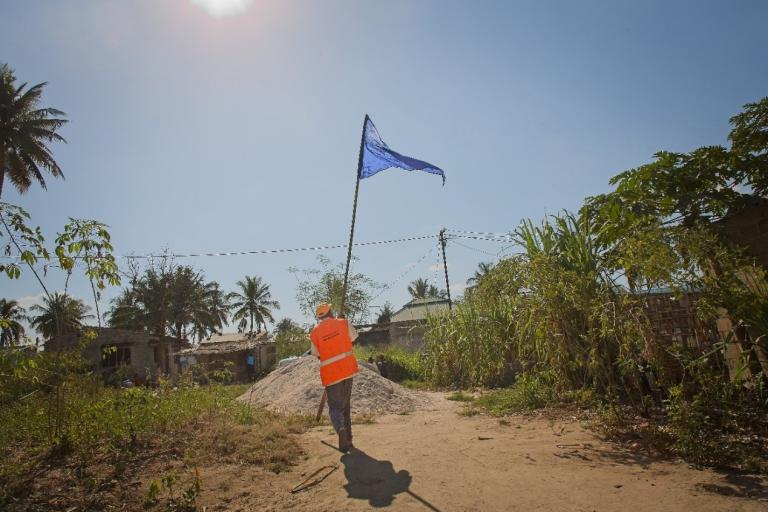
In 2024, the Swedish International Development Cooperation Agency made available US$ 5.5 million through the United Nations Office for Disaster Risk Reduction (UNDRR) to accelerate the implementation of the EW4All Initiative, which calls for every person on Earth to be protected by life-saving multi-hazard early warning systems (MHEWSs) by 2027. Of that allocation, WMO was granted US$ 900 000 to implement a multi-national project focusing on Pillar 2 of the EW4All value chain: Detection, observation, monitoring, analysis and forecasting.
The experience of the five countries demonstrates the diverse approaches needed to strengthen early warning systems. From rehabilitating and maintaining observation networks in Liberia and improving data exchange through WIS 2.0 in Mozambique, to strengthening impact-based forecasting and the use of the Common Alerting Protocol (CAP) in Bangladesh, needs and approaches differ, depending on the national context.
In Somalia, the emphasis was on building the institutional foundations for a national meteorological and hydrological service. The project contributed to national efforts to set up an NMHS, and thereby supported the development of governance structures, legal arrangements, coordination mechanisms, capacity building and strategic planning, as well as the country's EW4All roadmap. The aim was to move from fragmented, partner-led services towards a nationally coordinated and government-owned system.
In Liberia, quality data was at the centre of the project’s efforts. The priority was improving the observation network and the data available for forecasting, strengthening Liberia’s ability to generate continuous, reliable hydrometeorological information. The project supported the rehabilitation of stations, offered technical training, improved data transmission, and the digitization of historical records, providing stronger foundations for hazard monitoring, analysis, forecasting and early warning delivery.
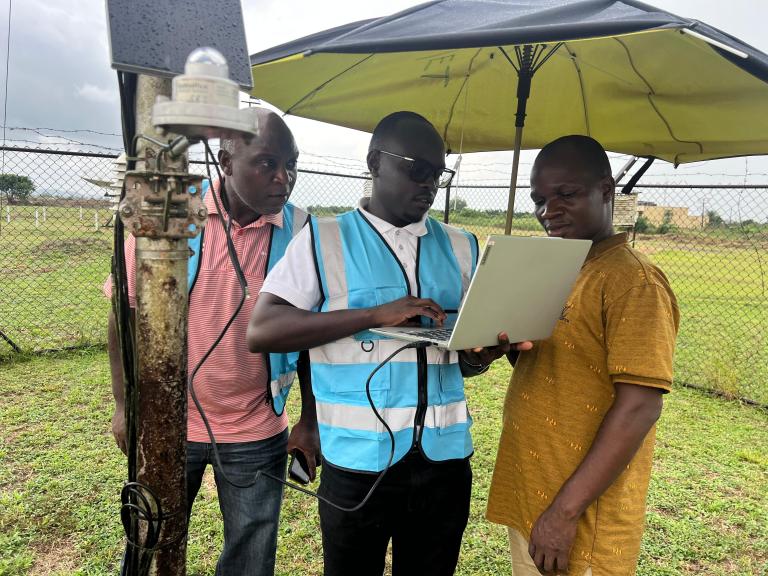
In Mozambique, the project focused on strengthening operational forecasting and warning services. Meteorological and hydrological staff received training on international observation and data-exchange systems, while digital platforms were developed to make monitoring data, forecasts and alerts more accessible. The work also supported the development of Common Alerting Protocol (CAP) alerts and standard operating procedures to improve forecasting and warnings for priority hazards.
In Bangladesh, the focus shifted further along the warning chain, with support for forecasting and alert dissemination, particularly for coastal hazards. Training covered storm-surge modelling and coastal inundation forecasting, while workshops brought together meteorological and hydrological services, government agencies and the media. The project also supported work towards standardized multi-hazard alerts using the Common Alerting Protocol (CAP).
In Haiti, where insecurity and institutional disruption create additional challenges, the priority was maintaining critical services while strengthening the country's longer-term early warning capacity. Support included backup power, forecasting equipment, satellite connectivity, technical training and flood-forecasting activities. The country's EW4All roadmap and Pillar 2 action plan were also finalized and validated.
National ownership was another common theme across the project. Countries took the lead in identifying priorities and implementing activities, while WMO provided technical support. The project also brought together UN agencies and regional partners, while South-South cooperation enabled countries to share expertise and experience. Liberia, for example, benefited from technical support from Nigeria, while Mozambique worked in collaboration with South Africa.
The project has established important building blocks, but the work is far from finished. In several countries, new investments are helping to build on this progress, including continued CREWS support in Haiti and new initiatives supporting early warning systems in Somalia and Mozambique. Looking beyond the 2027 EW4All target, the foundations established will continue to drive global efforts to strengthen resilience to weather-, climate- and water- related hazards.
Read the full publication for detailed insights into the case studies from each of the five countries: Strengthening Early Warnings for All: Advancing Observation-to-alerts for Early Warnings
- WMO Member:
- Bangladesh ,
- Haiti ,
- Liberia ,
- Mozambique ,
- Somalia