Escalating hazards demand escalated action
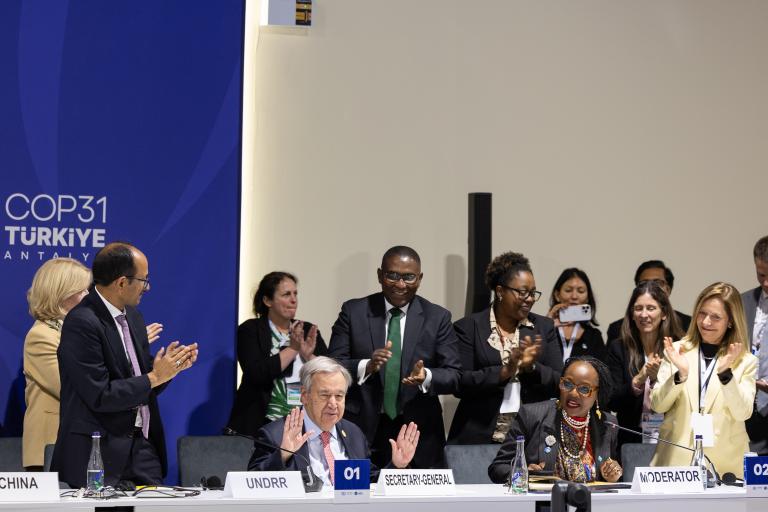
“No one should lose their life simply because a warning came too late – or never came at all,” UN Secretary-General António Guterres told a high-level event at the COP31 climate conference on the Early Warnings for All initiative, which he pioneered and elevated to centre stage of the global climate agenda.
His appeal came as a new report from the UN Office for Disaster Risk Reduction (UNDRR) and the WMO showed that 136 countries – 70 per cent of the total – now report having multi-hazard early warning systems, 17 more than in March 2025. Africa, in particular, has made great strides. Despite progress, one in three countries remain unprotected, especially least developed countries and small island states.
The report, Global Status of Multi-Hazard Early Warning Systems 2026, finds that countries with substantial to comprehensive systems record disaster-related mortality 6times lower than those with limited to moderate ones.
Since 2022, some USD 2 billion has been mobilised and around 160 countries are receiving support, he noted. But finance must cover the entire warning chain, he said; “from weather forecasting to communication tools to volunteers knocking on doors,” said Mr Guterres who received a standing ovation at the high-level event for his leadership and vision.
Mr Guterres set out three priorities:
- Make early warnings a permanent public service;
- Close financing and capacity gaps; and
- Move from fragmented projects to coordinated, long-term support for country-led plans.
Collective action
WMO and UNDRR spearhead Early Warnings for All, working closely with the International Telecommunications Union, International Federation of Red Cross and Red Crescent Societies and many other partners.
The high-level event discussion - which brought together countries from around the world - focused on what happens after the milestone year of 2027, set originally as the target year for the initiative. All speakers stressed that Early Warnings For All must continue, and that its success will be measured in lives and livelihoods saved.
“Early Warnings for All is not just a UN initiative. It is a response to an existential threat to the world. The question is not what we are going to do as a UN system, but what are we going to do collectively as humanity,” WMO Secretary-General Celeste Saulo told the high-level event on 11 November.
“Tropical cyclones, sand and dust storms and floods often originate hundreds of kilometers from where they impact. So warnings must travel just as far, through shared data and by more than one route. And we know this: a forecast in Europe, for example, depends on observations in Africa, the oceans and the Pacific,” she said.
Hazards are changing faster than the systems designed to protect people. For instance, in August, on the border between Nepal and China, rock and ice collapsed into a river, causing a deadly flood that raced at nearly 200 kilometres an hour and overwhelming a warning system build for monsoon floods.
“And this year, the strongest El Nino since 1950 is testing every system at once,” she said.
Science and warnings must be to be the foundation for action, but there are many operational challenges.
Only 15 in every 100 national weather services have all the technicians they need to run and maintain their systems.
Only 14 in every 100 weather services offer impact based forecasts of what the weather will do rather than what the weather will be.
Some AI forecasting tools now run on modest computers. But 29 national weather services still work with an unstable internet connection.
Africa makes strides
But there is much good news:
- Warnings are also increasingly triggering action before disaster strikes: in 2025, 146 anticipatory action activations in 54 countries reached 9.6 million people, the UNDRR-WMO report found.
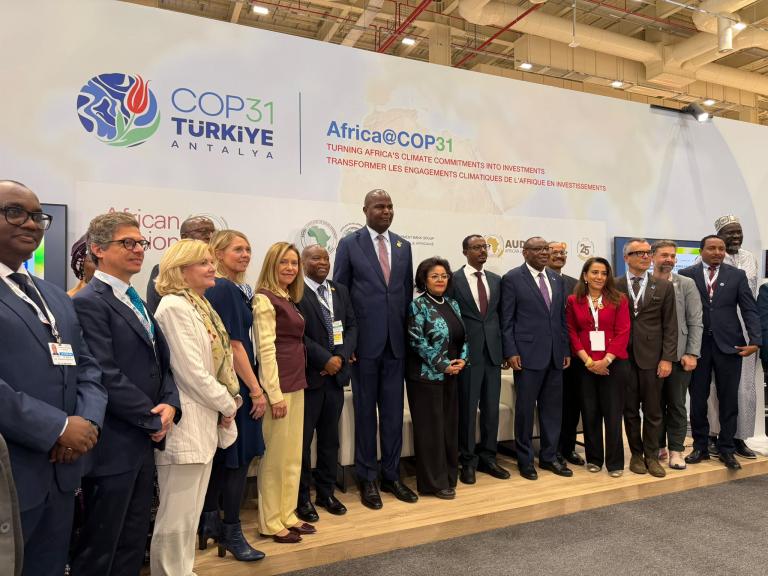
Africa is making strides thanks to commitment and coordination through national roadmaps.
These were showcased at
“No region has improved its early warning systems more than Africa. On average, Africa now stands level with the Americas,” Celeste Saulo told heads of state and government ministers at an event on Accelerating Early Warnings in Africa. .
Despite the progress, in Central and West Africa, fewer than half of the people hit by a disaster received warnings, she said.
Within two weeks of WMO declaring an El Niño in June 2026, Africa’s climate forum met in Zambia. In July, African Union ministers met in special session. In Madagascar and Zimbabwe, humanitarian funds were released before the drought arrived, using WMO forecasts, she said.
More can and should be done – and that starts with strengthening National Meteorological and Hydrological Services.
“If we’re going to build early warning systems that last, then we must place the national weather services at the heart of this work: the one authoritative voice that people can trust. And we must fund them as we fund other essential public services. Like hospitals, they must be paid for year after year, not only on the day they open,” said Celeste Saulo.