Integrated Water Resources Management and Early Warning System for Climate Change Resilience in the Lake Chad Basin

- Climate Resilience and Adaptation
- Disaster Risk Reduction
- Global Framework for Climate Services
- WMO Integrated Global Observing System
- Capacity Development
- Governance
- Observations
- Data Management
- Forecasting
- Service Delivery
- Early Warnings
Project background
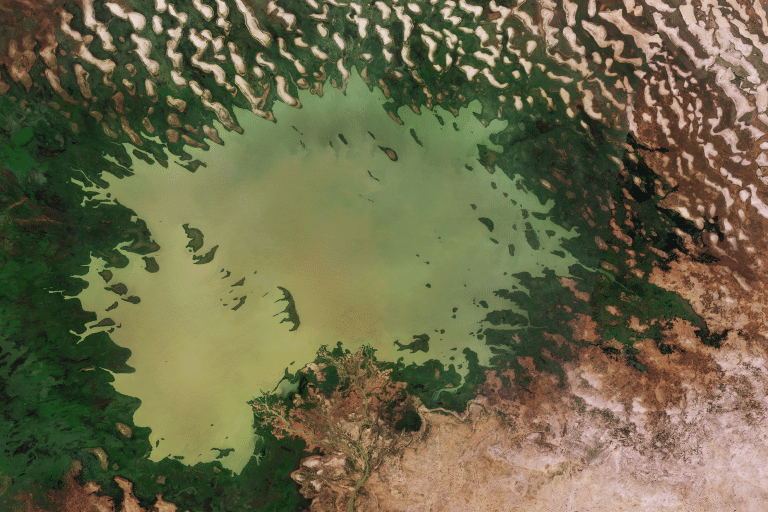
The Lake Chad Basin is highly exposed to climate-related hazards, including floods, droughts and water-related risks that affect lives, livelihoods, water security, agriculture, natural resources and regional stability. The transboundary nature of the basin makes regional cooperation essential, as weather, water and climate risks do not stop at national borders.
The project supports Cameroon, the Central African Republic, Chad, Niger and Nigeria to strengthen hydrological and meteorological monitoring, data management, forecasting and service delivery. It will improve regional cooperation, promote data exchange, enhance early warning systems, and support the use of actionable hydrometeorological information for planning, preparedness, and decision-making.
Implemented by WMO as the Multilateral Implementing Entity and executed by the Lake Chad Basin Commission (LCBC) and Global Water Partnership Central Africa (GWP-CAf), the project adopts a regional approach to improve climate resilience and disaster risk reduction across the Lake Chad Basin.
Objective(s)
The objective of the project is to increase the resilience of the population in the Lake Chad Basin by enhancing the countries’ capability to manage and adapt to climate-related risks through improved hydrological and meteorological monitoring, data systems, service delivery and greater awareness of climate-related hazards.
Outputs
- Hydrometeorological observation networks modernized or established, with staff trained.
- Sustainable funding mechanisms and organizational arrangements for hydromet monitoring strengthened at national and regional levels.
- A tailored regional interoperable database owned and managed by LCBC and National Meteorological and Hydrological Services established.
- Data-sharing agreements and platforms strengthened to support exchange of agreed hydrological and meteorological data.
- A transboundary early warning system mechanism designed based on national needs and regional policies.
- User needs and requirements better understood by NMHSs, public institutions and private-sector users.
- Climate risk assessments and climate services/products developed for the basin, including for food security and environmental services.
- Flood and drought forecasting tools and early warning systems strengthened in riparian countries and regional coordination improved.
- A framework for the production and sharing of hydrological status assessments and outlook products in place to inform water resource management.
- Awareness raised among decision-makers, lawmakers and water users, with stakeholder engagement and user feedback mechanisms strengthened.
- User feedback mechanism institutionalized.
- Communication and warning dissemination systems made operational and accessible, including for vulnerable and marginalized groups.
- Plans, policies and strategies for integrated flood and drought management, risk mitigation and climate resilience developed at regional, basin and national levels.
- Medium- and long-term adaptation and mitigation measures recommended in vulnerable pilot areas, taking into account gender, youth and disability considerations.
Expected outcomes
- Strengthened institutional and human capacities to monitor and detect climate-related hazards through improved operation and maintenance of infrastructure and tools.
- Enhanced regional cooperation for improved information systems and services for planning and decision-making.
- Improved enabling environment for understanding and addressing user needs for hydrometeorological products and services.
- Development of products and services for climate-adaptive and responsive planning and development.
- Enhanced communication and awareness programmes on hydromet and early warning systems.
- Enhanced preparedness and response capability to act upon warnings and risk information and reduce impacts on lives, livelihoods and socio-economic systems.
- Enhanced basin-level governance mechanisms and increased adaptive capacity in agricultural and natural resource sectors and disaster risk management.
Project team
Related news
- Region:
- Region I: Africa
Implemented in
Donors