10 000 Ships for Ocean Observations
- Author(s):
- Emanuela Rusciano (OceanOPS), Victor Turpin (OceanOPS), Marie-Aude Bonnardot (ARMINES-Paris), Laura Stukonyte (GOOS), David Lavers (ECMWF), Mathieu Belbéoch (OceanOPS)
The ocean is warming and changing rapidly, yet our ability to observe these changes remains uneven across the globe. Some regions are well monitored, while vast areas of the ocean remain sparsely observed. These gaps matter. Timely observations are essential to improve weather and climate prediction, guide activities at sea, understand climate change and support marine ecosystems and coastal communities. Existing observing networks cannot meet the growing demand alone. New approaches are needed to extend sustained observations in poorly monitored regions.
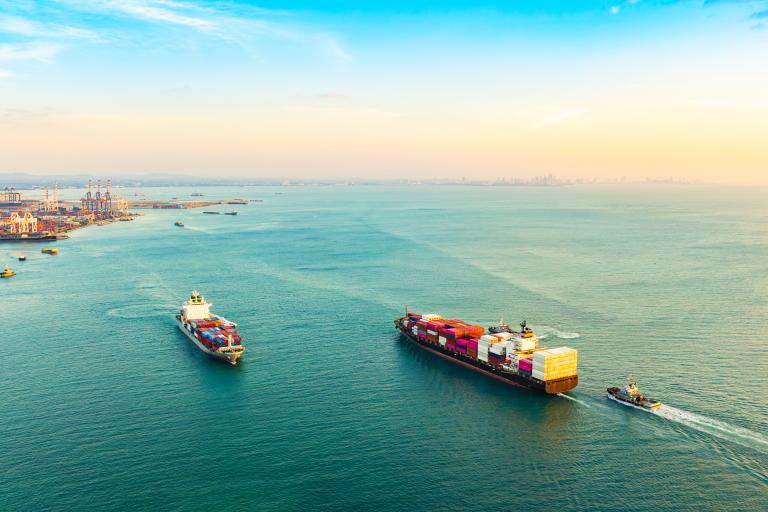
Meanwhile, thousands of commercial ships travel the world's ocean every day, following major shipping routes and reaching remote areas where scientific observing instruments can be difficult and expensive to deploy. These vessels offer an opportunity to significantly expand global weather and ocean observations, complementing existing observing networks.
The 10 000 Ships for the Ocean initiative was launched at the 2025 United Nations Ocean Conference, with an ambitious goal: to establish a coordinated fleet of 10 000 commercial vessels providing real-time meteorological observations and, progressively, ocean observations by 2035. The initiative is led by OceanOPS, a joint centre of the World Meteorological Organization (WMO) and the Intergovernmental Oceanographic Commission of the United Nations Educational, Scientific and Cultural Organization (IOC-UNESCO), in collaboration with both organizations and other international scientific institutions and partners.

By leveraging ships that are already at sea, the initiative aims to turn commercial shipping into a larger and more systematic contributor to the Global Ocean Observing System (GOOS) and the wider Global Observing System.
How technology is transforming ship-based observations
For more than 150 years, commercial and research vessels have contributed observations through the Voluntary Observing Ship network. Ship crews have traditionally recorded measurements such as air pressure, temperature, and wind, providing valuable information for weather forecasting and climate monitoring. Today, advances in technology are making it easier for ships to collect and share observations.
Compact autonomous sensors can measure ocean properties with minimal crew involvement, while improved satellite communications allow observations to be transmitted almost immediately. Modern data systems can then automatically check, process and distribute measurements to scientists, forecasters, and operational services around the world.
These technologies allow relatively small, increasingly automated observing systems to be integrated into commercial vessels without turning them into research ships.
Commercial ships also offer something particularly valuable: repeated measurements along routes travelled week after week, year after year. Observations of wind, air humidity and pressure, ocean temperature and salinity can help scientists track changes in atmospheric and ocean conditions over time and across different regions.
With thousands of vessels travelling along major shipping routes and beyond, the commercial fleet could significantly expand coverage of existing observing networks operated by governments, research institutions and international organizations.
“We are living through massive weather and climate changes and we no longer have time to hesitate. We need to come together and put our resources on the table. Our planet is compelling us to act, and to find new ways to work together to meet the challenges ahead”, says Mathieu Belbéoch, OceanOPS Manager.
Why 10 000 ships?
The number 10 000 is aspirational rather than a firm deployment target. It reflects the scale needed to make commercial shipping a significant component of the global observing system. A fleet of this size could provide a substantial and geographically distributed source of observations, taking advantage of the regular routes travelled by commercial vessels to increase data collection across ocean regions that are currently poorly observed.
No single observing technology or organization can meet all observation needs. The future of GOOS will depend on combining complementary approaches, including autonomous instruments, research and commercial vessels, reference observing sites and satellites. Commercial ships could help fill gaps in coverage, including along routes through poorly observed areas, by collecting additional information about the ocean and atmosphere.
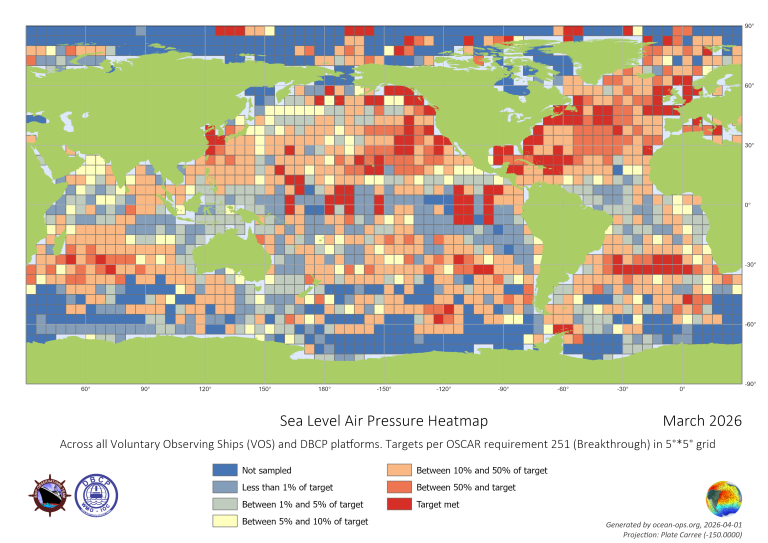
The 10 000 Ships initiative aims to build a coordinated network of participating vessels and operators, with common standards for instrumentation, data transmission and quality control. Not every ship will need to collect the same measurements. The types of observations will depend on each vessel’s capabilities and route, as well as the needs of the global observing system.
Some vessels may contribute to weather observations, while others could carry instruments measuring sea-surface temperature, salinity, ocean carbon, or other ocean properties. Over time, more advanced sensors could also collect data on biogeochemistry and marine ecosystems.
A partnership between public and private sectors
Making this vision a reality will require a new model of collaboration between governments, international organizations, the scientific community and the shipping industry.
For governments and the scientific community, commercial vessels offer an opportunity to expand observations without relying exclusively on dedicated research infrastructure. For shipping companies, participation offers a change to contribute to a global public good while potentially benefitting information that supports their operations.
Better observations can contribute to safer navigation, route planning, and operational efficiency. As climate change alters ocean conditions and increases the risks associated with some marine hazards, reliable information will become increasingly important for managing risk and planning long-term investments.
The challenge is to build partnerships that deliver these benefits to both public and private participants.
Testing the approach at sea
The 10 000 Ships initiative builds on emerging pilot projects and partnerships to test how sensors can be installed on commercial vessels, observations transmitted automatically and data integrated into existing observation and information systems. They will also help identify practical challenges before deployment can be scaled up.
In 2025, the Mediterranean Shipping Company (MSC), one of the world's largest container shipping companies, joined the 10 000 Ships for the Ocean initiative to support the expansion of GOOS. As a champion company, MSC is participating in a pilot project to equip commercial vessels with automated sensors that collect weather and ocean observations. The resulting data are expected to improve weather forecasts and climate research, while also supporting safer and more efficient shipping through better route planning, improved fuel efficiency and reduced emissions in the face of increasing climate risks.
What is needed to scale up?
Moving from individual pilot projects to a global fleet will require several key ingredients.
International coordination will be essential. Commercial ships operate across national boundaries, while weather and ocean observations are a global public good. National and regional initiatives need to be connected to ensure their observations contribute effectively to GOOS.
Common standards are equally important. Observations collected by thousands of vessels need to be accurate. Agreed approaches to sensors, calibration, data quality, and metadata will help ensure that data can be used confidently by different communities.
Sustainable financing will also be critical. Sensors need to be purchased, installed, maintained, and eventually replaced. Data systems require long-term support. A successful initiative therefore needs funding models that recognize both the public value of the observations and the potential benefits to participating companies.
Finally, strong partnerships with industry will be fundamental. Commercial vessels operate under demanding conditions, and observing systems need to fit into existing workflows without creating unnecessary burdens for crews or operators. Understanding the practical needs of shipping companies from the beginning will be essential to making participation attractive and sustainable.
Turning this ambition into a lasting global observing network by 2035 will require sustained commitment, innovation, and cooperation. But the opportunity is clear: by working with the shipping industry, the ocean and atmosphere observing community can mobilize thousands of additional observers across the ocean.
As the ocean continues to warm and change, we need to know more about it, in more places and more often. 10 000 Ships for the Ocean offers a practical way to help meet that challenge by turning commercial shipping into an additional source of weather and ocean observations.