Commission for Weather, Climate, Hydrological, Marine, and Related Environmental Services and Applications (SERCOM)

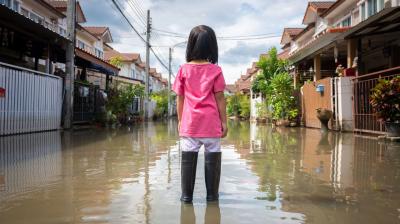
Early warning services - especially impact-based warnings that inform the public of what the weather will do rather than what it will be - are an essential service that all National Meteorological Hydrological Services (NMHSs) must provide to their citizens to mitigate disaster risks and avoid the loss of lives and livelihoods that have, in the past, resulted from weather, climate and water related extreme events. But almost every sector - food and agriculture, energy, health, aviation and shipping, financial markets, water resources, etc - and all our endeavours - sports, holidays, what we wear, etc - are impacted by weather, climate, water.
In additional to early warning services, the Commission for Weather, Climate, Hydrological, Marine, and Related Environmental Services and Applications (SERCOM) is responsible for the coordination and delivery of reliable, timely and targeted services for all sectors impacted by weather, climate and water by NMHSs.
What is the mandate of the Services Commission?
The Commission coordinates the development and implementation of globally harmonized weather-, climate-, water-, ocean- and environment-related services and applications to enable informed decision-making and the realization of socioeconomic benefits by all user communities and society as a whole.
It promotes a holistic approach to services and service delivery and assists Members to apply:
- Risk-based decision-making in support of disaster risk preparedness and reduction
- A service-oriented culture
- A strong user focus with "fit-for-purpose" services
- Quality management in service delivery
- Standards for competence and qualification of personnel
- Mutually-beneficial public-private engagement providing optimized service delivery and added value to society
- Accelerated uptake of advanced technology for service delivery
- Systematic evaluation of socioeconomic benefits and other relevant market-oriented evaluations of products and services.
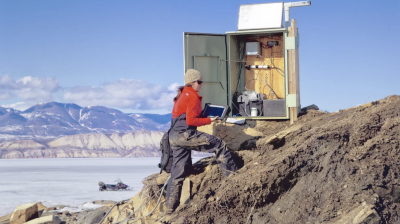
Emerging services under development include urban services, environmental services, multi-hazard early warning services, polar and high mountain area services, health, energy, food security, water management, land transportation, and others as the list is expanded as it becomes necessary.
Who are its members?
The Commission is composed of technical experts designated by WMO Members.
How does it operate?
SERCOM meets every two years. The members of the Commission elect its president and vice-president. Over their four-year term of service, the principal role of the president and vice-president is to preside over the sessions of the Commission and to guide and coordinate its activities and those of its subsidiary bodies between sessions. The president and vice-president report to the World Meteorological Congress on those activities and present the views of the commission at sessions of the Executive Council.
The activities of the Commission are guided by the WMO Strategic Plan and the WMO Strategy for Service Delivery. The Commission encompass application areas with substructures as needed to implement the WMO Strategic Plan.
SERCOM Officers


Switzerland