
First WMO guidance to support national estimates of greenhouse gas emissions using atmospheric observations
The World Meteorological Organization (WMO) has published the first IG3IS Good Practice Guidance for Estimating National-Scale Greenhouse Gas Emissions using Atmospheric Observations, marking a significant step forward in strengthening global transparency and improving the scientific basis for national greenhouse gas (GHG) inventories.

Developed under the Integrated Global Greenhouse Gas Information System (IG3IS) of the Global Atmosphere Watch (GAW) Programme, the new national-scale guidance provides practical methods and examples for using atmospheric measurements to derive national-scale estimates of emissions and removals. These approaches complement traditional inventory methods and can help countries verify reported emissions, improve their accuracy, and detect emerging trends.
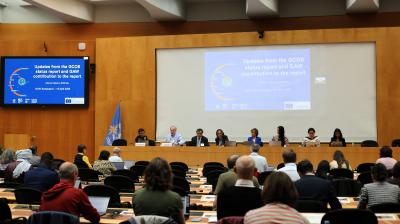
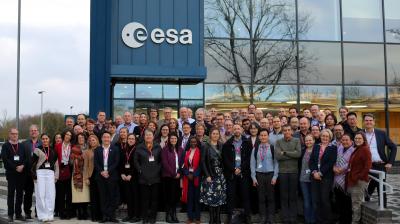
The guidance is the result of broad collaboration across the global scientific and inventory community. The IG3IS Steering Committee developed it, underwent an open public review, and was further refined during a dedicated workshop in June 2025. Participants included representatives from countries developing national inventories, scientists working on atmospheric measurement and modelling, and experts from the Intergovernmental Panel on Climate Change (IPCC) Task Force on National Greenhouse Gas Inventories (TFI) and the United Nations Framework Convention on Climate Change (UNFCCC) Secretariat (UN Climate Change).
The document explains the scientific principles behind atmospheric-based emissions estimation and showcases mature functional systems from around the world. These real-world examples illustrate how such systems are designed, operate, and can be integrated into national inventory processes. The guidance will be updated regularly as new technologies, datasets, and monitoring capabilities become available.
The publication is organized into four sections:
- Section 1 provides a general, non-technical overview of systems that derive greenhouse gas fluxes from atmospheric measurements. It serves as an accessible introduction for inventory compilers, funding agencies, and readers new to the topic.
- Section 2 offers more detailed technical considerations for measurement and modelling teams designing such systems.
- Section 3 outlines approaches for quality control and for interpreting results from atmospheric measurement-based flux estimation systems (AMFES).
- Section 4 presents examples of current functional systems used in different parts of the world, demonstrating how methods are adapted to regional characteristics.
The new guidance supports WMO’s mission to strengthen Earth system monitoring and provide high-quality, science-based information for mitigation. By assisting countries in incorporating atmospheric observations into planning and monitoring of national commitments related to greenhouse gas emissions (e.g., Nationally Determined Contributions (NDCs)), it contributes to global transparency efforts under the Paris Agreement. It also offers tools to improve the accuracy and robustness of national inventories.
More information:
- Integrated Global Greenhouse Gas Information System (IG3IS)
- IG3IS National-scale Applications of the Science-based Quantification of Emissions and Removals
Note: The Integrated Global Greenhouse Gas Information System (IG3IS) is an initiative under the Global Atmosphere Watch (GAW) Programme, part of the World Meteorological Organization (WMO). It involves various partners and institutions and aims to utilize observational approaches to enhance understanding of greenhouse gas sources and properties at scales relevant to decision-making, including national and local levels. Coordination of IG3IS activities is supported by the Swiss Confederation (MeteoSwiss) and the National Aeronautics and Space Administration (NASA) under award N. 80NSSC23K1349.