
Life in a Global Atmospheric Watch Station: Watching the Air from the Top of the Andes
- Author(s):
- Marcos Andrade (Laboratorio de Física de la Atmósfera, Instituto de Investigaciones Físicas, Universidad Mayor de San Andrés), Paolo Laj (WMO)
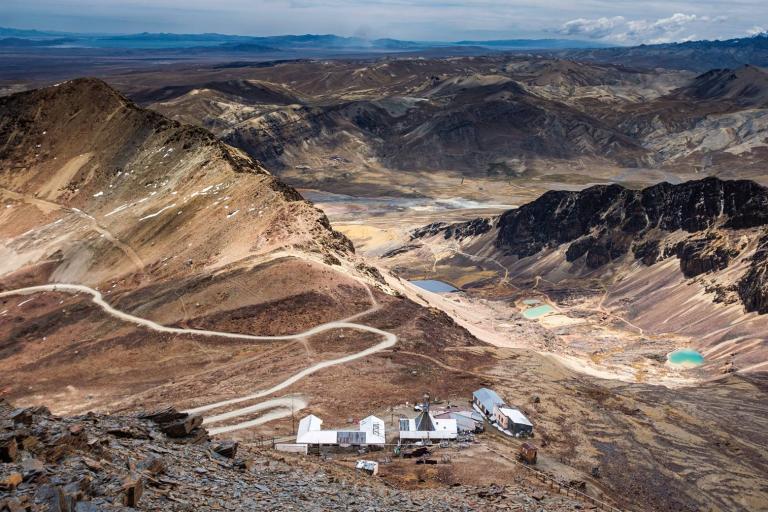
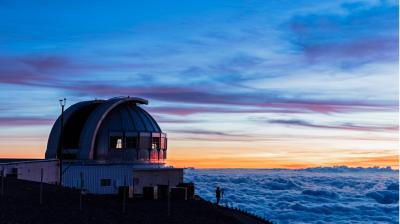
Perched high on Mount Chacaltaya, more than 5200 metres above sea level, a small scientific station is carrying out a vital mission. The Chacaltaya Observatory in Bolivia may seem remote and isolated, but it plays a crucial role in helping us understand the air we breathe and the changing climate of our planet.
Chacaltaya was once home to an Andean glacier and one of the world’s highest ski resorts. Closely monitored by glaciologists, it completely disappeared in 2009, becoming one of the first tropical glaciers in the Central Andes to vanish. Long before the atmospheric station was established, however, the site was already known to scientists. Since the 1940s, it has hosted a high altitude laboratory for studying cosmic rays, where researchers made some of the earliest observations of subatomic particles arriving from space.
Today, this legacy continues, with Chacaltaya bringing together climate science, atmospheric monitoring and fundamental physics at one of the most remarkable research sites on Earth. Since 2010, the station has been operated by an international consortium led by the Laboratorio de Física de la Atmósfera at Universidad Mayor de San Andrés (LFA-UMSA), working in partnership with institutions from France, Germany, Sweden, Switzerland, Finland and the United States.
Behind the measurements is a dedicated team of Bolivian scientists, technicians and students who maintain instruments, ensure data quality and manage the flow of information to international databases. Despite its relatively remote location high in the Andes, the observatory is equipped with electricity, internet and around the clock security, allowing it to support scientific research throughout the year and regularly host researchers and their instruments from across the globe.
A rare window into the atmosphere
Around the world, scientists rely on a network of monitoring stations to measure greenhouse gases, air pollutants, and tiny particles known as aerosols. These stations contribute to the World Meteorological Organization (WMO) Global Atmosphere Watch (GAW) programme by providing long-term observations of the Earth's atmosphere.
Yet large parts of the world, particularly in South America, Africa, and parts of Asia, remain under-monitored. Most atmospheric observation stations are located in the northern hemisphere, leaving major gaps in global coverage. This is where stations like Chacaltaya play a critical role.
Chacaltaya is one of only a handful of high altitude monitoring stations in South America. Its location makes it unique. Unlike stations in cities or lowlands, which mainly measure local pollution, Chacaltaya sits high enough to sample air that has traveled long distances. It often captures what scientists call the “background atmosphere”: air that reflects regional or even global conditions rather than local pollution sources.
This gives researchers a rare opportunity to observe how pollution and greenhouse gases move across continents. Air arriving at Chacaltaya can come from the Amazon Basin, from the Pacific Ocean or from the high plains of the Andes. Along the way, it may pick up smoke from forest fires, emissions from cities or natural particles like dust. Not far away, the cities of La Paz and El Alto, home to almost two million inhabitants, also emit pollutants. During the day, air from these cities often reaches the sampling station, meaning emissions can be detected at very high altitudes.
By analysing this air, scientists can trace where pollutants come from and how they spread. This is essential for understanding issues like wildfire smoke, urban pollution, and even the global carbon cycle.
Measuring what matters
At the station, a wide range of instruments continuously measure the composition of the atmosphere. This includes:
- Greenhouse gases such as carbon dioxide and methane, which are responsible for global warming
- Gaseous air pollutants like ozone, nitrogen oxides and sulfur dioxide, which affect human health
- Aerosols, tiny particles that suspended in the air and influence both climate and air quality, including black carbon (commonly known as soot)
- Weather variables, including temperature, humidity, and wind
Different instruments provide measurements both at ground level and across the entire atmospheric column. What makes these observations particularly valuable is their consistency and the fact they can be directly compared to measurements performed in other stations.
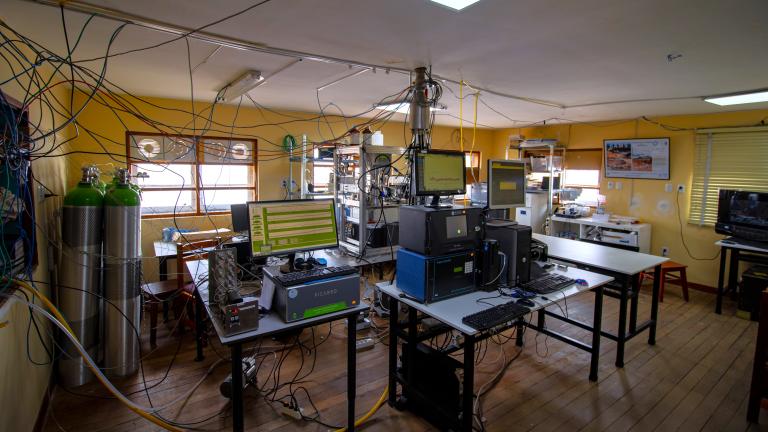
The station has now been operating for more than 14 years, providing continuous records that allow scientists to detect trends and changes over time. One of the most important lessons from Chacaltaya is that air pollution can travel to high altitude. For example, the station frequently detects particles from biomass burning, large-scale fires associated with agriculture and deforestation. These fires often occur far away, yet their smoke can travel hundreds or even thousands of kilometres to reach the Andes.
Measuring multiple atmospheric variables at the same time allows scientists to identify the signatures of different pollution sources. For example, forest fires are easily detected when carbon monoxide, the number of particles and black carbon all peak simultaneously and the air arrives from the low lands.
Keeping a station running at the top of the Andes
The natural landscape around Chacaltaya is breathtaking, but the reality of operating a station at that altitude is a different matter altogether. Although data is transmitted via the internet, Chacaltaya staff employed by UMSA must make weekly trips to inspect and calibrate instruments, as well as to change air filters located slightly higher up, at the mountain's summit.
Many of those who visit the station live in La Paz at an altitude of around 3600 metres above sea level. But climbing another 1600 m is a considerable effort. Typically, four hours of work there leaves anyone exhausted. For this reason, the average workday on the mountain lasts no more than five hours, although some station veterans can work up to six without issue much to the dismay of their younger colleagues.
Among those involved in operating the station is Fernando Velarde, the technician responsible for the instruments. He regularly visits Chacaltaya for maintenance tasks and monitors both the main station and auxiliary sites in El Alto and La Paz. He also oversees the submission of observations to international data repositories.
The station is staffed around the clock. Four staff members rotate shifts throughout the month, spending several days at a time on the mountain. In addition to guarding the site, they carry out basic emergency maintenance during power outages and other unexpected events. Bernardino Escóbar, one of the station staff, says he enjoys the "peace and quiet" of working on the mountain, although he admits that he misses his family at times.
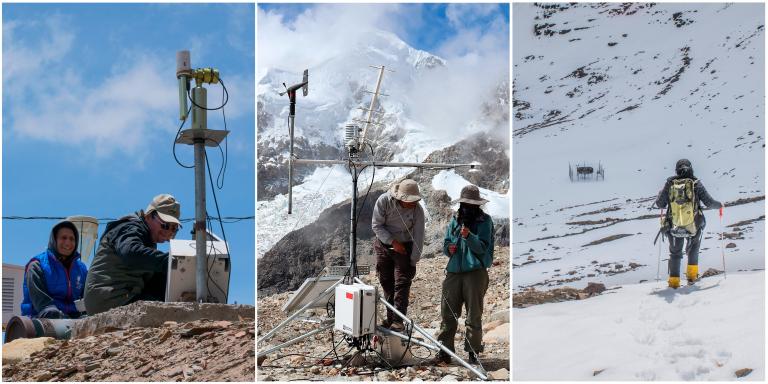
Given the physical toll that spending days at 5240 metres can have on the human body, there is an unwritten rule at Chacaltaya: the shift change must happen no matter what. Recently, security concerns in La Paz prevented transit across the metropolitan area, and the Institute could not send a vehicle to pick up the outgoing shift. It was Escóbar’s turn to go up, so he climbed the mountain on foot. The journey covered approximately 20 kilometres and 1600 metres of elevation gain, taking about four hours.
"I was exhausted", he recalls, "but I was happy my colleague could go home. Of course, he also had to go down on foot!"
A new generation of pioneers
Over the past five years, LFA undergraduate students and young graduates have played an increasingly important role in keeping the station running. Fabricio Ávila, a staff engineer, supports instrument maintenance and electronics, while a new generation of scientists has taken on growing responsibilities. Laura Ticona, for example, was responsible for the greenhouse gas instruments, while Zarela Tuco now contributes not only to greenhouse gas monitoring but also to the operation of other instruments across the network.
Originally from a small community in the Altiplano near La Paz, Laura was the first person in her family to attend university. She began at Chacaltaya as a student assistant and gradually took on greater responsibilities. "At the beginning, it was about proving, to myself and others, that I could do this", she says. "Today, it is driven by a deep connection to science and to the region where I come from".
Working at more than 5200 metres above sea level is not without its challenges. "At first, the solitude and silence can be intimidating", Laura reflects, "but over time they become a source of strength and connection".
Fernando Velarde followed a different path. He joined Chacaltaya shortly after graduating from university and is now responsible for maintaining and calibrating instruments, ensuring data quality, and supporting scientific analysis. What keeps him motivated is the sense of discovery. "It is like working in a natural laboratory", he says.
Many who work at Chacaltaya end up falling in love with the mountains. Laura reached the summit of Huayna Potosí (6088 metres), while Abigail Fito, an LFA student, now leads fieldwork activities on Ancohuma (6400 metres) alongside British peers.
The first generation of students working for Chacaltaya are now well-recognized experts in atmospheric science in Latin America and beyond. Today, a new wave of Bolivian atmospheric scientists is emerging, with some pursuing graduate studies abroad, often in Europe. The hope is that many will return to Bolivia, helping to strengthen atmospheric research and build on the unique long-term observations collected at Chacaltaya.
Why global monitoring matters
When using atmospheric data, it is easy to overlook the tremendous effort required to collect it, especially in countries facing economic and logistical constraints. Less visible still is the determination of the scientists, technicians, and administrators to keep measurements running regardless of strikes or blockades. This commitment stems from an understanding of the importance of documenting local and global changes.
High altitude stations are particularly valuable because they provide information that cannot be obtained elsewhere. They help distinguish between local pollution and large-scale background conditions, offering insights into processes that shape the entire atmosphere.
Stations like Chacaltaya are part of a much larger effort to build a global picture of the atmosphere. Networks such as GAW connect observations from around the world, creating a shared database that scientists and policymakers can use. This global perspective is essential. Climate change and air pollution are not local problems, they are global challenges. To address them effectively, we need accurate, comparable data from many different regions.
From its perch in the Andes, Chacaltaya offers a powerful reminder: understanding our planet requires looking at it as a whole. In a world facing rapid environmental change, such knowledge is not just valuable, it is indispensable.
- WMO Member:
- Bolivia, Plurinational State of
- Region:
- Region III: South America