CREWS Niger 2.0: Strengthening and Modernizing Early Warning Services

- Climate Resilience and Adaptation
- Disaster Risk Reduction
- Capacity Development
- Governance
- Observations
- Data Management
- Forecasting
- Service Delivery
- Early Warnings
Project background
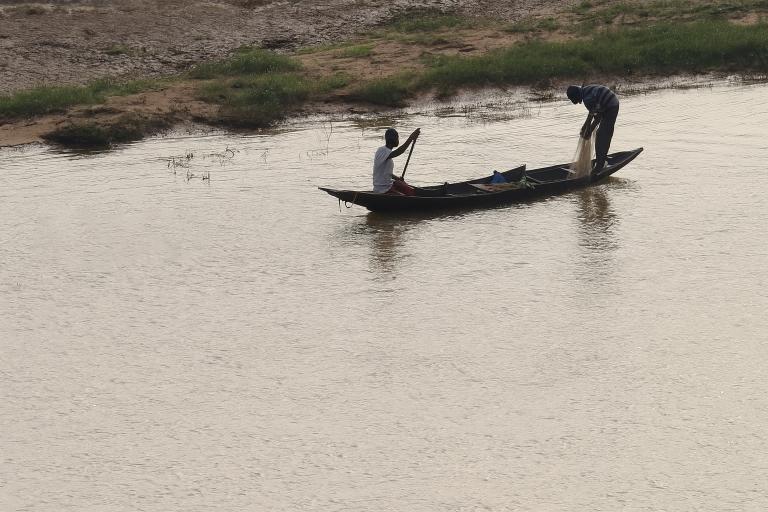
Niger faces recurrent floods, droughts, and extreme weather events causing annual losses of over USD 60 million. The CREWS Niger 2.0 project builds upon the first phase (2018–2023) that established key systems for hydrometeorological data, flood warnings, and local preparedness structures.
The new four-year phase (2024–2028) aims to consolidate and scale up national early warning capacities by supporting institutional reforms, enhancing risk monitoring tools, and improving data-driven decision-making. The project also complements the World Bank’s Niger Integrated Urban Development and Multisectoral Resilience Project (PIDUREM) and the West Africa Food System Resilience Program (FSRP), ensuring synergy between early warning, food security, and risk reduction initiatives. The project will be led by WMO, working closely with other CREWS implementing partners World Bank and UNDRR.
CREWS Niger 2.0 directly benefits over 3.4 million people through improved flood and food insecurity early warning services in high-risk basins such as the Niger River (Niamey, Tillabéri), Komadougou Yobé (Diffa), Goulbi Maradi (Maradi), and Kori de Telwa (Agadez).
Objective(s)
- Strengthen national and local capacities for multi-hazard early warning systems (EWS) and climate resilience.
- Consolidate governance mechanisms for disaster risk management and response coordination.
- Enhance the co-production and dissemination of impact-based forecasts for floods and droughts.
- Empower communities—especially women and vulnerable groups—to participate in local early warning and preparedness structures.
Outputs
Component A – Institutional Strengthening and Risk Governance
This component strengthens Niger’s institutional and technical capacities to coordinate disaster risk management (DRM) and climate services. It enhances collaboration among national institutions (MAH/GC, DGPC, DMN, DGRE, and CC/SAP) through improved frameworks and policies aligned with international standards.
Output 1.1 - Enhanced coordination and updated national DRM and climate policies.
Output 1.2 - Targeted training for hydromet professionals and adoption of quality management standards.
Output 1.3 - Upgraded data management systems, observation networks, and digital tools for monitoring and forecasting.
Output 1.4 - Mainstreaming of gender equality and disability inclusion in risk governance and decision-making.
Component B – Early Warning Service Delivery
This component focuses on improving the delivery and accessibility of impact-based early warnings for floods, droughts, and other hazards.
Output 2.1 - Development of user-oriented hydrometeorological tools and forecasting models.
Output 2.2 - Strengthening of the national risk information platform www.risques-niger.ne and regular alert bulletins.
Output 2.3 - Establishment of localized flood early warning systems in high-risk river basins (Niamey, Tillabéri, Diffa, Maradi, and Agadez).
Output 2.4 - Revitalization of community-based networks (OSV and SCAP/RU) to enhance local monitoring, preparedness, and inclusive participation.
Expected outcomes
- National early warning systems (EWS) are more efficient, coordinated, and people-centred.
- Improved forecasting accuracy and dissemination of alerts for major hazards.
- Increased institutional and technical capacities of national meteorological and hydrological services.
- Strengthened resilience and preparedness in vulnerable municipalities.
- Empowerment of women and persons with disabilities in disaster governance mechanisms.
Achievements
- CREWS Phase I established operational EWS mechanisms and flood alert systems.
- Enhanced coordination among MAH/GC, DGRE, DMN, and CC/SAP.
- Created the national disaster management platform www.risques-niger.ne.
- Produced modernization and strategic plans for Hydromet services and the national SAP system.
- Strengthened local community structures (OSV/SCAP-RU) for decentralized monitoring.
Phase 2 will build upon these achievements through expanded technical capacity, institutional integration, and digital transformation.
- Region:
- Region I: Africa
Implemented in
Donors
Partners