Supporting regional cooperation to strengthen seamless operational forecasting and multi hazard early warning systems at national level in the South-West Indian Ocean (CREWS SWIO)

- Disaster Risk Reduction
- Aviation meteorological services
- Capacity Development
- Governance
- Observations
- Data Management
- Forecasting
- Service Delivery
- Early Warnings
Project background
The Climate Risk and Early Warning Systems (CREWS) South-West Indian Ocean (SWIO) project is a regional initiative involving Comoros, Madagascar, Mauritius, Seychelles, and Mozambique. The project supports these countries in strengthening their capacity to provide reliable, timely, and impact-based multi-hazard early warnings. By doing so, it contributes to protecting lives, property, and livelihoods from the increasing risks associated with extreme weather and climate events.
With a total budget of USD 4 million, the project is jointly implemented by the World Meteorological Organization (WMO), the United Nations Office for Disaster Risk Reduction (UNDRR), and the World Bank. Of this, the WMO grant amounts to USD 1.75 million, aimed at supporting regional centers and national institutions in improving operational forecasting systems, strengthening coordination mechanisms, and enhancing service delivery both at national and regional levels.
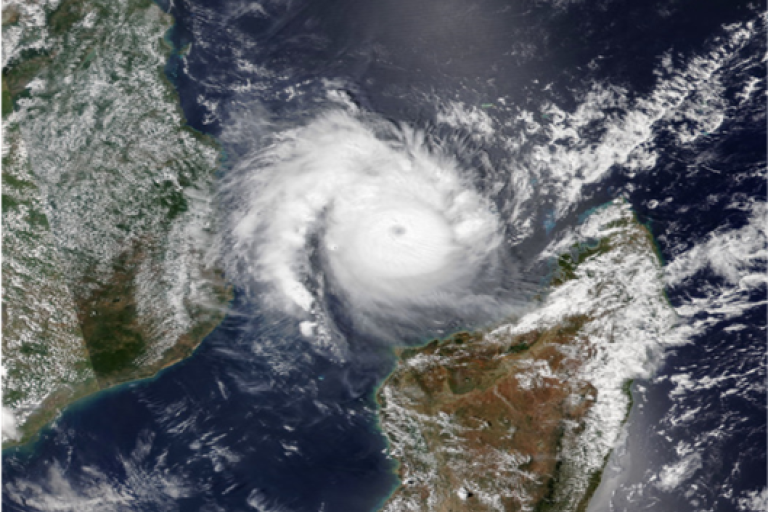
Given the SWIO region’s high vulnerability to climate variability and change, the project plays a crucial role in addressing risks related to tropical cyclones, storms, storm surges, floods, and other hydrometeorological hazards. The region’s exposure to such events, combined with limited adaptive capacity, underscores the need for stronger early warning and preparedness systems.
To this end, the project promotes improved institutional coordination at the national level among hydrometeorological, disaster management, and sectoral agencies, while also enhancing regional collaboration among the five participating countries. This coordinated approach supports the development of seamless operational forecasts and the establishment of an integrated multi-hazard early warning system that serves as a foundation for climate resilience and risk-informed development.
Recognizing the importance of sustaining these gains, a Phase II of the CREWS SWIO project is in the pipeline to continue addressing identified priority needs and to consolidate achievements at both regional and national levels
Objective(s)
The overall project objective is to enhance the adaptive capacity and climate resilience of communities and economic sectors in five countries of the SWIO region. This will involve strengthening multi-hazard and impact-based early warning systems through: (i) improving the regional cooperation frameworks for forecasting of climate and weather, including seasonal and sub-seasonal outlooks, tropical cyclones, storm surges, other severe weather events, flooding and climate extremes; and (ii) supporting dissemination, emergency planning and response capacities in each of the beneficiary countries.
Outputs
Regional outputs:
Output 1 - South West Indian Ocean Climate Outlook Forum (SWIOCOF): Guidance provided in relation with long range forecasting, climate monitoring and data services at regional level.
Output 2 - Regional WIGOS centers (RWC): Guidance provided to Kenya and Tanzania NMHSs to put in place a regional WIGOS center for East Africa
Output 3 - Regional instruments center (RIC): Guidance provided to the IOC in relation with the AFD-supported refurbishment or setup of a regional instruments center
Output 4 - Severe weather forecasting (SWFP): Severe Weather Forecasting program (SWFP) strengthened to improve lead-time, accuracy, reliability and dissemination of forecasts and warnings advisories for high-impact events by South Africa Weather Service, and training and equipping forecasters with appropriate tools (workstations).
Output 5 - Tropical cyclone forecasting products: Regional cooperation enhanced as part of the African (RA I) Tropical Cyclone Committee, through provision of in-country training on tropical cyclone forecasting and warnings for the five countries and promoting the development of a "synergized standard operating procedure" for tropical cyclone forecasting at national level specifically to improve the lead time, accuracy and reliability of tropical cyclone forecasting
Output 6 - Flood forecasting tools (urban, coastal, riverine): Guidance provided to national hydrological services develop national hydrological capacities with appropriate regional cooperation, in the spirit of the original HYCOS proposal which was developed by IOC Member States in 2019
National outputs:
Output 1 - Each NMHS receives support, in relation with the project’s objectives, according to priorities expressed by Permanent Representatives
Achievements
Strengthening Synergies and Achievements in the SWIO Region
A key achievement under the programme has been the strong synergy built with other regional initiatives and projects implementing similar activities across the South-West Indian Ocean (SWIO) area. This collaboration ensures complementarity of efforts and prevents duplication of activities. Key initiatives include the ClimSA Project, the GCF-funded Hydromet Project, and the World Bank’s Regional Climate Resilience Programme (RCRP), and the partners include AGRHYMET, RSMC Pretoria, RSMC La Reunion, and the NMHS s of the SWIO countries.
As a result of these collaborations, several joint achievements are being realized. Notably, technical guidance and specifications for weather radar systems were developed to support the World Bank in the acquisition of weather radars. Additionally, assessments of operational and maintenance costs for these systems were conducted, and training sessions for National Meteorological and Hydrological Services (NMHSs) staff were organized on the use and interpretation of weather radar equipment and products.
Institutional Strengthening and Strategic Alignment
To enhance institutional effectiveness, National Strategic Plans (NSPs) have been developed for the Meteorological Agencies of Seychelles, Mauritius, and Comoros, aligning their operations with their national strategic visions. Furthermore, the Government of Mauritius developed its National Framework for Climate Services (NFCS), aimed at strengthening climate service delivery across key sectors.
In response to the strategic goals, the Seychelles Meteorological Authority (SMA) established a Results-Based Management (RBM) system to systematically track progress and measure service outcomes. SMA ensured a new organizational restructuring with new and revised positions along with competency-based job descriptions that aligned with its’ Results-Based Management framework.
As part of continuous quality improvement, Seychelles achieved ISO 9001:2025 recertification, marking its second consecutive certification. Similarly, Madagascar has initiated documentation and staff training in preparation for its own ISO certification.
To strengthen its’ legislative framework, SMA reviewed and updated its Meteorological act to incorporate a regulation on cost recovery for meteorological services for air navigation.
Knowledge Exchange and Institutional Transformation Knowledge
A study visit to Seychelles was organized for representatives from Comoros and Madagascar to learn from Seychelles’ experience in transitioning into an autonomous meteorological agency. Following this exchange, both countries have begun reviewing and updating their legal and institutional frameworks to support similar transformations.
In parallel, RSMC La Réunion continued to enhance the availability and accessibility of Météo-France products, including through the establishment of a dedicated server to address the specific needs of Least Developed Countries (LDCs) and Small Island Developing States (SIDS) in the region.
Capacity Building and Education
Several capacity-building initiatives have been undertaken to strengthen human resources across the region. A staff member from the DTM ANACM Comoros completed a master's degree in Climate Change and Sustainable Development, focusing on agrometeorology.
To promote early awareness and resilience among young learners, WMO supported the printing of 1,000 copies of the “COPE Flood and Cyclone” children’s books in Malagasy. These books were distributed to schools, in collaboration with the Ministry of Education, during World Meteorological Day celebrations.
Enhancing Early Warning and Digital Systems
In partnership with UNDRR, WMO coordinated national consultations and led the preparation of the Early Warnings for All (EW4All) Roadmap for Mozambique, a key step toward strengthening multi-hazard early warning systems.
The EW4All Roadmap and Action Plan for Seychelles has been finalised and approved.
Furthermore, WMO supported the development of the new SMA website, which integrates CAP Composer for multi-platform warning dissemination and WIS2Box to enable international data sharing. These improvements have also enhanced the performance of high-resolution models covering Seychelles, including the AROME 1.3 km model.
Related news
Related events

- Region:
- Region I: Africa
Implemented in
Donors
Partners