Typhoon Committee boosts regional disaster resilience
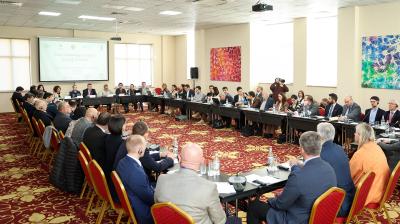
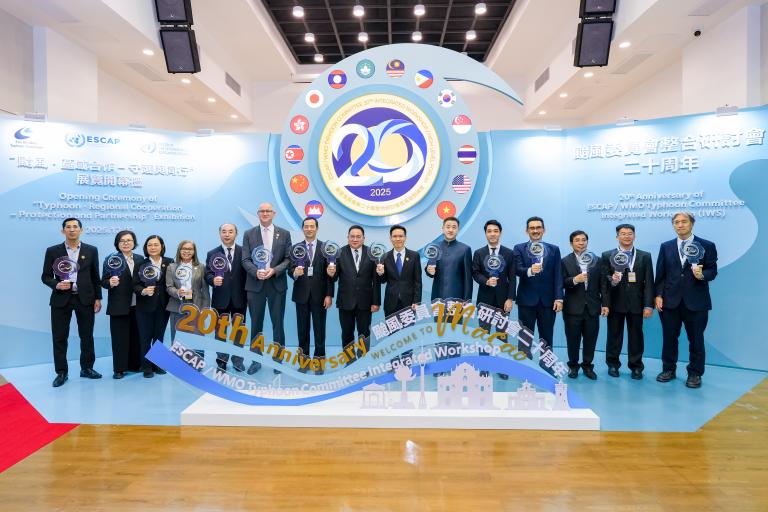
For four days in early December, the city of Macao, China, was a regional hub of ideas, expertise, and renewed commitment as it hosted the 20th Integrated Workshop and High-Level Forum of the ESCAP/WMO Typhoon Committee. What began as a technical gathering soon unfolded into a shared story, one of collaboration, innovation, and a collective determination to protect millions of people across the Asia–Pacific from the growing threat of tropical cyclones.
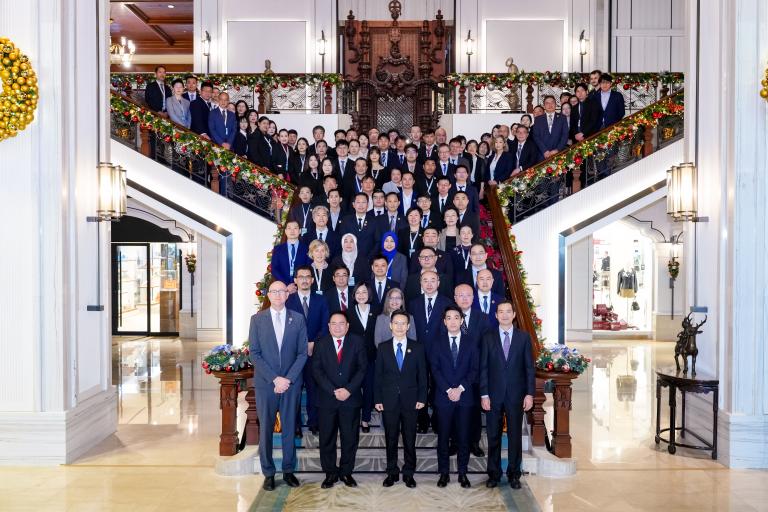
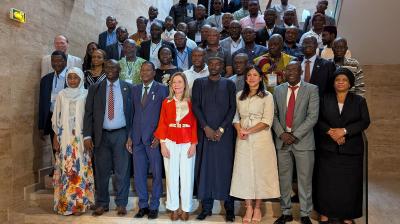
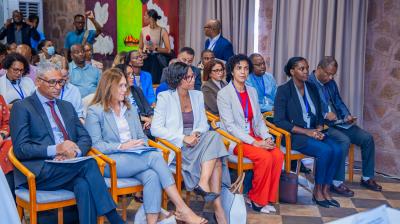
From 2 to 5 December 2025, representatives from United Nations Economic and Social Commission for Asia and the Pacific (ESCAP), the World Meteorological Organization (WMO), the Typhoon Committee Secretariat, and experts across meteorology, hydrology, disaster management and academia convened in Macao. The Typhoon Committee Members brought with them not only data and research but also experiences from increasingly complex weather challenges.
At the heart of the forum was a the theme: “Closing Gaps and Creating Opportunities Together: Developing the Typhoon Committee’s Future Strategy.” Delegates explored the future of forecasting and early warnings, the readiness of disaster management systems, and new ways of building resilience to stay ahead of rapidly evolving risks in a warming climate. Their insights will help shape the Typhoon Committee’s Strategic Plan for 2027–2031, a roadmap for the next chapter of cooperation.
"The Asia-Pacific region faces the most intense and frequent typhoon activity in the world. Record-breaking rainfall, storm surges and floods displace millions and cause billions of dollars in economic losses,” said WMO Secretary-General Celeste Saulo in a video message.
“Yet, amid these challenges, there are also inspiring stories of progress: early warnings that reached the most vulnerable and led to early action; regional data sharing and collaboration; and recovery efforts that built back stronger,” she said.
Celeste Saulo emphasized that the future strategy of the Typhoon Committee must build on three pillars: integration, inclusion and innovation.
The Joint Statement of the Typhoon Committee High-Level Forum is based on these three pillars. It reaffirms a shared vision to strengthen regional cooperation, more robust collaborative research, and greater openness in data and knowledge exchange. It also underscores Members’ commitment to joint projects and training activities that can translate scientific progress into lifesaving action on the ground.
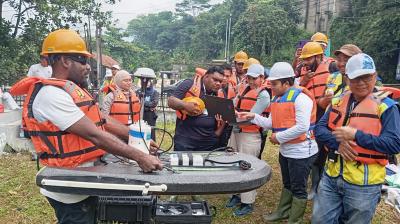
In parallel, the 20th Integrated Workshop was held under the theme “Shaping the Future: Applying Innovation to Actions Addressing Typhoon Challenges and Opportunities.” The workshop explored cutting-edge technologies, new research breakthroughs, and practical applications designed to better anticipate, monitor and mitigate the impacts of severe storms.
“We live in an era of rapid technological change. Artificial intelligence, satellite observations, high-resolution modelling, and data integration are reshaping how we predict and respond to weather extremes. Innovation is not only about technology, but also about partnerships, governance, and community engagement,” said Celeste Saulo.
As host, Macao, China emphasized its commitment to advancing technical cooperation within the region. Officials reiterated that Macao will continue to strengthen its own capabilities while supporting neighbouring Members in enhancing preparedness and resilience.
2025 typhoon season
The 2025 typhoon season was exceptionally active. There were 26 typhoons in the Western North Pacific and the South China Sea until the end of November, 2.7 above the multi-year average of 23.3 for the same period.
WMO’s Regional Specialized Meteorological Centre (RSMC) Tokyo continued to anchor the region’s warning system with high-quality satellite analysis and authoritative best-track guidance.
Regional capacity-building partnerships further demonstrated how technology, science and cooperation translated into better forecasts, stronger resilience, and more effective protection of communities in the path of tropical cyclones.
There were a series of remarkable success stories across the region.
These included:
- Stronger multi-hazard early warning and hydrological monitoring systems,
- Improved disaster preparedness and response,
- Advanced airborne reconnaissance and radar-based 3D wind retrieval,
- A regional AI data exchange portal that strengthened collaborative forecasting.
Ten typhoons made landfall in China in 2025. Typhoon-related disasters affected a total of 9.4 million people across 12 provinces and forced the emergency evacuation of 3.5 million people. Thanks to the forecasts and early warnings and successful disaster management, there were just ten 10 fatalities.
Super Typhoon Ragasa was the strongest tropical cyclone in the Western North Pacific and South China Sea in 2025, reaching an estimated 125 knots at peak intensity. Ragasa set a historical record in Hong Kong, China as the furthest tropical cyclone ever to trigger the maximum Hurricane Signal No. 10. The storm generated hurricane-force winds, widespread damage, and extensive coastal flooding. There were major transport disruptions, including the cancellation of over 700 flights. There were 100 injuries but no loss of life – further testimony to the success of early warnings and early action.
More showcase of successful stories is available at China's early warning practice丨Proactive services and response to enhance typhoon defense capabilities in China.
- WMO Member:
- Macao, China ,
- China
- Region:
- Region II: Asia