Strengthening Mozambique’s Early Warning Systems through Meteorological and Hydrological Capacity Building
Under the Swedish-funded Early Warnings for All (EW4All) multi-stakeholder accelerator in Least Developed Countries and Small Island Developing States, WMO has been supporting the Government of Mozambique.
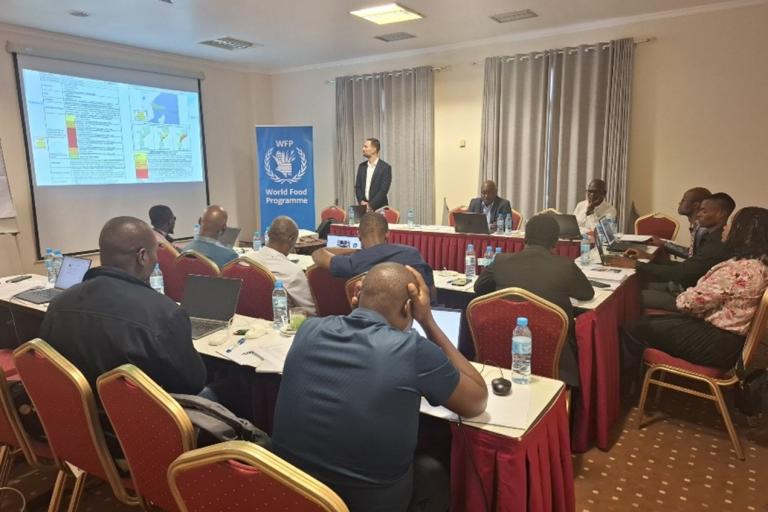
The country’s National Meteorological and Hydrological Service (NMHS) is being strengthened to improve national early warning systems and close critical gaps. The project has focused in particular on Pillar 2 of the EW4All Programmatic Framework - strengthening meteorological and hydrological monitoring, forecasting, and warning capabilities as the foundation for effective early action. These efforts have enabled the initiation, development, and validation of a national EW4All roadmap and the ongoing implementation of concrete actions.
In this context, WMO conducted a detailed mapping of early warning system capabilities within the National Directorate of Water Resources Management (DNGRH). This assessment helped establish a clear baseline of existing hydrological monitoring, forecasting, data management, and warning dissemination capacities, identifying strengths, gaps, and priority areas for investment. The mapping directly informed DNGRH’s contributions under EW4All and resulted in clear, actionable recommendations to guide the way forward, supporting more strategic planning, coordination, and implementation across institutions.
Additionally, WMO supported the modernization and development of the official websites of both the National Institute of Meteorology (INAM) and DNGRH. The work focused on ensuring that monitoring data, forecasts, and warnings are accessible, understandable, and usable by a wide range of users, including disaster risk management authorities and the public. This included improving the presentation of operational products, enabling the publication of alerts in Common Alerting Protocol (CAP) format, and strengthening interoperability through the linking of national observation stations to WMO global systems. These improvements enhance both national service delivery and Mozambique’s integration into regional and global early warning infrastructures.
Through the project, the South African Weather Service (SAWS), in collaboration with WMO, delivered specialized, hands-on technical training to personnel from the National Institute of Meteorology (INAM) and the National Directorate of Water Resources Management (DNGRH). Capacity-building activities focused on key operational areas, including:
- Flash Flood Guidance System (FFGS) training, delivered through sessions held in both Pretoria and Maputo, strengthening flood monitoring and warning capabilities;
- Advanced Numerical Weather Prediction (NWP) training in Pretoria, enhancing forecasting skill and confidence;
- Impact-Based Forecasting (IBF) training, delivered in Maputo to support more actionable and user-focused warnings.
Further, Mozambique has benefited from targeted WMO and SAWS support under the WISER-funded Early Warning for Southern Africa project. This support has included technical assistance on nowcasting tools to enhance short-term warnings, training on the Common Alerting Protocol (CAP), and the co-production of impact-based forecasting (IBF) products through local testbeds involving forecasters. Additional activities have focused on disaster management through engagement with community representatives, alongside community-focused awareness campaigns to strengthen early warning uptake at the grassroots level.
Most recently, Mozambique has taken an important step towards strengthening its operational readiness for tropical cyclones. Through a national technical workshop, key institutions responsible for meteorology, hydrology, and disaster risk management worked together to review, harmonize, and formalize Standard Operating Procedures (SOPs) for cyclone monitoring, forecasting, warnings, and communication. The process, supported by WMO and partners, focused on ensuring that procedures are clear, consistent, and aligned across institutions.
The main outcome of the activity is a new operational manual that standardizes how cyclone threats are assessed and communicated in Mozambique. The document defines step-by-step workflows, decision thresholds, warning levels, and timelines, and clarifies how information is shared between national services and emergency authorities. By strengthening links between observation, forecasting, and communication, the SOPs support more timely and reliable warnings, while remaining firmly grounded in national legislation and international best practice.
Beyond the technical product, the process strengthened coordination and shared understanding among institutions. Forecasters, hydrologists, and disaster managers jointly discussed scenarios, roles, and responsibilities, helping to reduce ambiguity during high-pressure situations. This collaborative approach contributes to a more effective end-to-end early warning system, ensuring that scientifically robust information can be translated into clear guidance for decision-makers and communities at risk.
Finally, strong coordination under the EW4All roadmap has been further reinforced through close collaboration with the World Food Programme (WFP). In support of Pillar 2 implementation, WFP recruited a dedicated technical coordinator to help drive progress across both hydrology and meteorology, working closely with WMO and national institutions to ensure coherence, alignment, and momentum under the EW4All framework. In addition, WFP serves as the implementing partner of the Systematic Observations Financing Facility (SOFF) in Mozambique, a key in-country pillar of EW4All, supporting sustained investments in surface-based observing networks that underpin effective forecasting and early warning services.
Through coordinated support and complementary WMO projects, Mozambique is strengthening its institutional, technical, and operational capacities of DNGRH and INAM to enable their vision under the EW4All.
- WMO Member:
- Mozambique ,
- South Africa
- Region:
- Region I: Africa