

First CREWS SIEWAP Project Steering Committee Meeting and EW4All Peer Exchange


Samoa
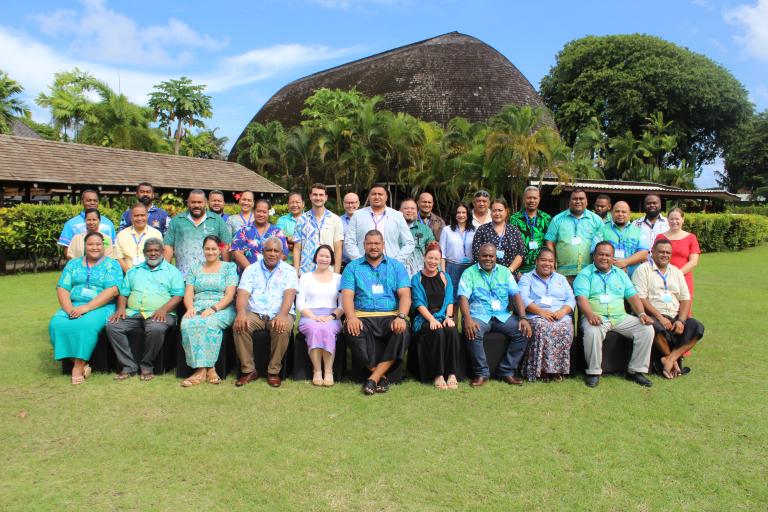
The first project steering committee meeting was held for the Climate Risk and Early Warning Systems (CREWS) - Scale Up Inclusive Early Warning and Action in the Pacific (SIEWAP) Project on 9 March 2026 in Apia, Samoa to discuss, review and endorse the 2026 workplan of the project.
The CREWS SIEWAP project is a 4-year (2025-2029) regional CREWS Initiative-funded project in the Pacific whose primary objective is to scale up people-centred and end-to-end multi-hazard early warning systems (MHEWSs) across the Pacific.
The initiative covers Cook Islands, Federated States of Micronesia, Fiji, Kiribati, Republic of the Marshall Islands, Nauru, Niue, Palau, Samoa, Solomon Islands, Tokelau, Tonga, Tuvalu, and Vanuatu.
Click here for a snapshot of the project!
Alongside the CREWS SIEWAP Steering Committee meeting, there was an Early Warnings for All (EW4All) Peer Exchange discussion for countries to exchange experiences and lessons learned in the development of MHEWS roadmaps. The session brought together government representatives (NMHS and NDMO) and regional partners to discuss progress and challenges in the roadmap development process and explore opportunities for resource mobilization.
The meeting was participated by NMHSs and selected National Disaster Management Offices (NDMOs) of Pacific Members
Agenda
The EW4All Action Plan Peer Exchange Concept Note is available here: CREWS SIEWAP - EW4ALL Pacific Exchange March 2026.pdf
| Time (LT) | Agenda Item | Presentation(s) | Speaker |
|---|---|---|---|
1ST CREWS SIEWAP PEER STEERING COMMITTEE MEETING | |||
| Session 1 - Opening and Progress | |||
| 08:30 - 09:00 | Registration | - | |
| 09:00 - 10:00 | Formality Programme | Mr Henry Taiki (WMO) | |
| 10:00 - 10:30 | Morning Tea and Group Photo | ||
| 10:30 - 10:45 | PSC ToR Endorsement and Selection of Chair and Vice-Chair
Objectives and Expectations of the PSC | Project Overview | Presentation: SIEWAP PSC | WMO/UNDRR Elected Chair |
| 10:45 - 11:00 | Overview of WMO Restructure Update on Project Progress/Challenges/Risks and Management
| WMO/UNDRR | |
| 11:00 - 11:30 | Update on Project Finance/Delivery Rate
Project Reporting Timeframes and General Operations | WMO/UNDRR | |
| Session 2 - Opportunities and Collaboration | |||
| 11:30 - 13:00 | Share Alignments and Potential Opportunities
| WMO/UNDRR | |
| 13:00 - 14:00 | Lunch break | ||
| Session 3 - EW4All Peer Learning Sharing | |||
| 14:00 - 14:15 | Welcome and Overview of the EW4All roadmap development process and regional process | UNDRR/WMO | |
| 14:15 - 15:20 | Pacific EW4All National Leads sharing of reflection based on the following guiding questions:
| Fiji Kiribati Tonga Samoa Solomon Islands *10 min per Country | |
| 15:20 - 15:30 | Open floor discussion/ Q&A | All | |
| 15:30 - 15:45 | Afternoon Tea Break | ||
| 15:45 - 16:00 | Summary/Wrap-up | UNDRR/WMO | |
Document(s)
All meeting documents are available here: CREWS SIEWAP
Quick link
